

🎭 Tuesday in the Common Room

There are only two ways to deal with a closet:
You may organize it — or you may open it and accept Providence.
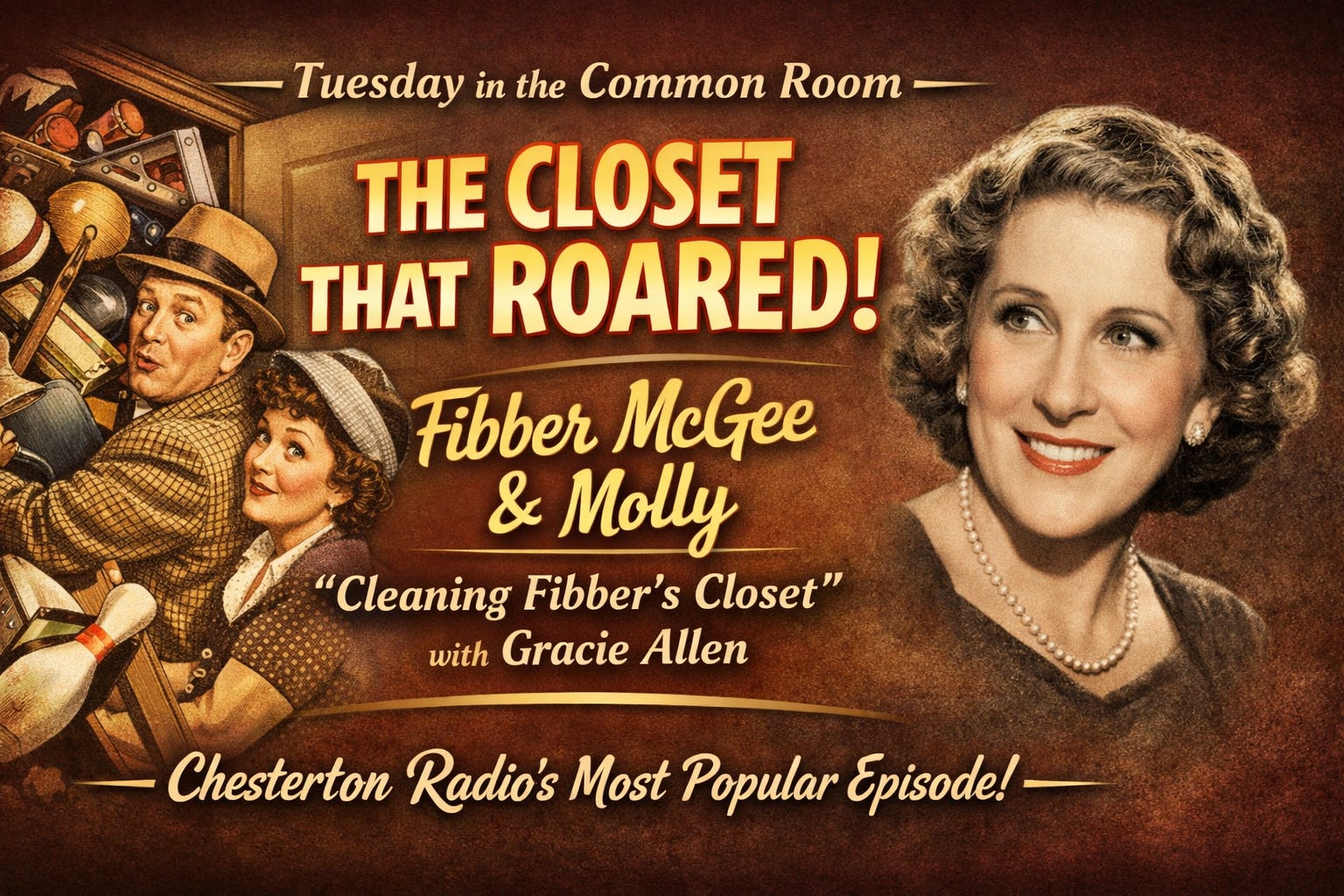
Every Tuesday in the Common Room, we revisit the cheerful catastrophes of Wistful Vista. And among all the episodes we’ve aired, none has drawn more listeners than “Cleaning Fibber’s Closet.” It is the most-played Fibber McGee & Molly broadcast on Chesterton Radio — and for good reason.
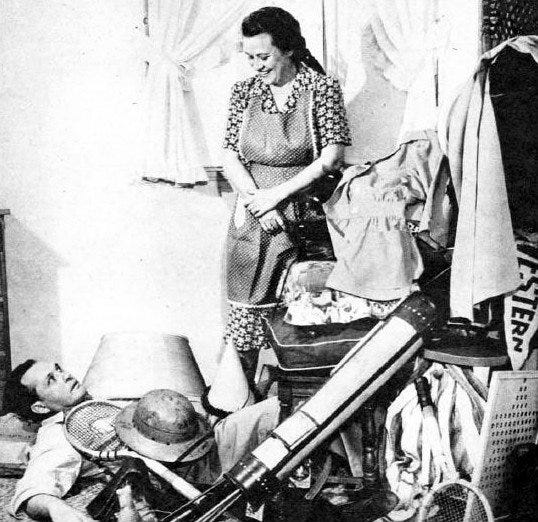
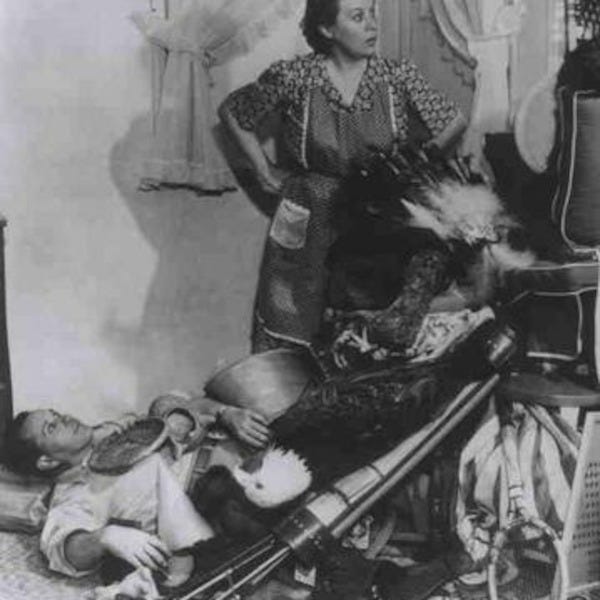
For the uninitiated, Fibber McGee possesses a hall closet of such alarming density that when opened, it does not reveal contents so much as unleash them. The avalanche of bric-a-brac — pots, pans, tennis rackets, and objects whose original purpose has long been forgotten — crashes outward like a domestic Niagara Falls. It is a sound effect so perfectly constructed that it has become one of the most recognizable gags in radio history.
But here is the curious thing: the joke is never cruel.
That is the secret.
The Marriage at the Center
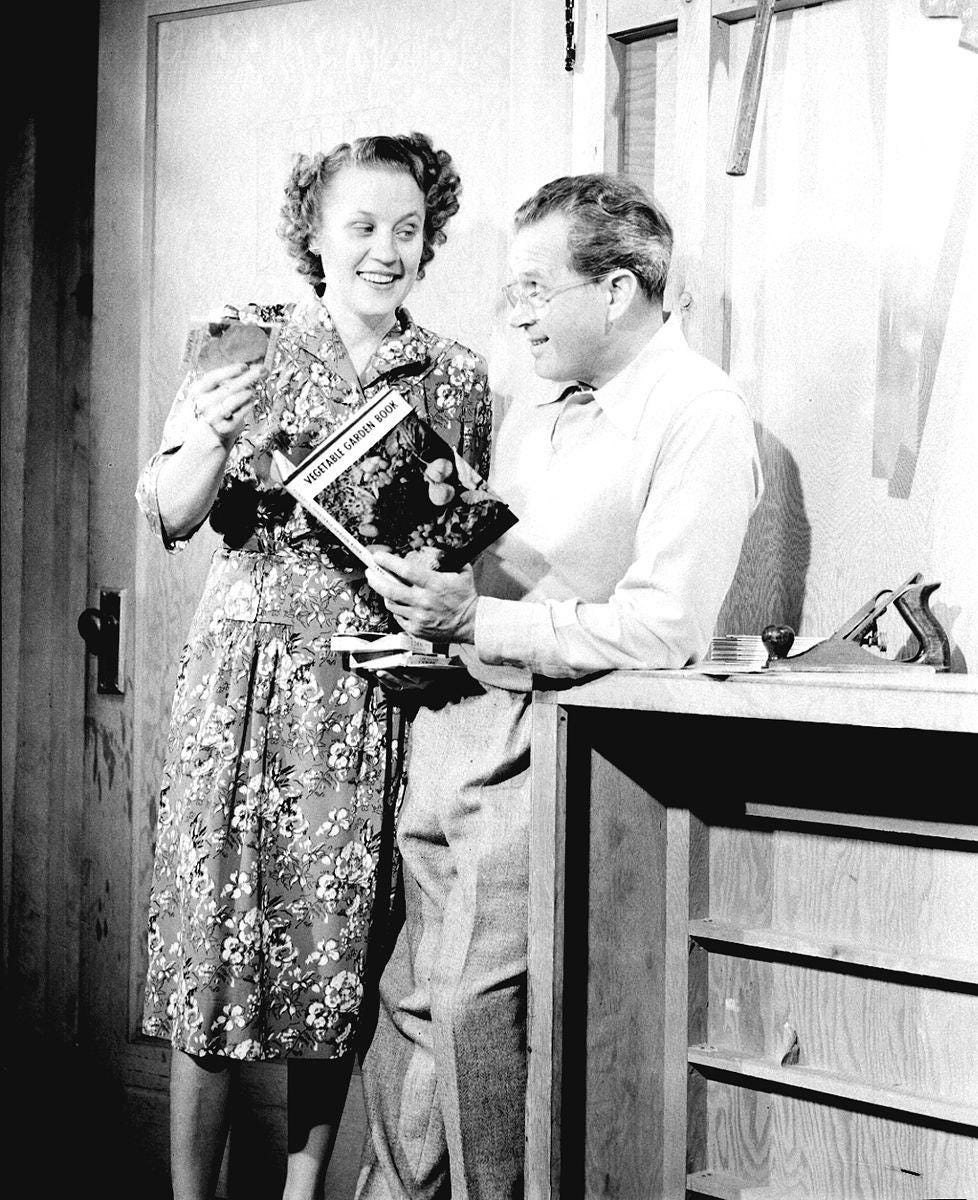
Behind the crashing clutter stands Molly — steady, sensible, affectionate Molly — whose exasperation is always tempered with loyalty. The genius of Jim and Marian Jordan was not simply in writing jokes; it was in creating a marriage that felt real. Not glamorous. Not dramatic in the modern sense. Simply durable.
Chesterton once observed that the most extraordinary thing in the world is an ordinary man and his ordinary wife. In Wistful Vista, that paradox becomes audible.
Fibber is boastful, occasionally foolish, and perpetually optimistic. Molly is perceptive, patient, and quietly heroic. And yet neither dominates the other. Their affection is the atmosphere of the show. Even when the closet explodes, the marriage does not.
That stability — that domestic sanity — may be why this episode resonates so strongly today.
Disorder and the American Spirit
The famous closet gag is more than slapstick. It is a small parable of American life.
We are a nation that collects — ambitions, gadgets, unfinished plans — and shoves them behind a door, promising to “get to it later.” The crash is the music of postponed order. And yet, when the avalanche subsides, no one is harmed. The world continues. Laughter restores proportion.
This particular episode is enriched by the presence of Gracie Allen, whose surreal logic and impeccable timing add a second layer of delightful confusion. Her comedic rhythm contrasts beautifully with Fibber’s bluster, creating a kind of orchestration of absurdity.
And what emerges is not chaos, but joy.
Why This Episode Matters Now
When this program first aired, America was emerging from hardship — economic strain, global conflict, uncertainty about the future. Families gathered around their radios not because life was tidy, but because it was not. Comedy did not deny the strain; it domesticated it.
In our own anxious age, the lesson remains timely.
You may not control the avalanche.
But you may control whether you laugh.
And there is something profoundly civilized about shared laughter that does not sneer, does not wound, and does not require vulgarity to survive.
That is why this episode has become our most popular Fibber McGee & Molly broadcast on Chesterton Radio. It reminds us that ordinary life — cluttered, noisy, imperfect — is still worth celebrating.
Listen Tonight
If you have not yet heard it, step into the Common Room and experience the most famous closet in American radio.
👉 Watch here:
Turn the lights low. Let the sound fill the room. And when the door opens — as it inevitably must — enjoy the crash.
A Word About Chesterton Radio
Chesterton Radio exists to revive the Golden Age of Radio not merely as nostalgia, but as nourishment. These programs remind us that storytelling can be witty without being cruel, dramatic without being vulgar, and funny without being hollow.
We are listener-supported and independent. If evenings like this matter to you — if you value a refuge from modern noise — consider becoming a supporter.
We are building not just a stream, but a home.
And on Tuesdays, at least, we open the closet together.
—
Chesterton Radio
Stories that stir the mind.
Drama that feeds the soul.