

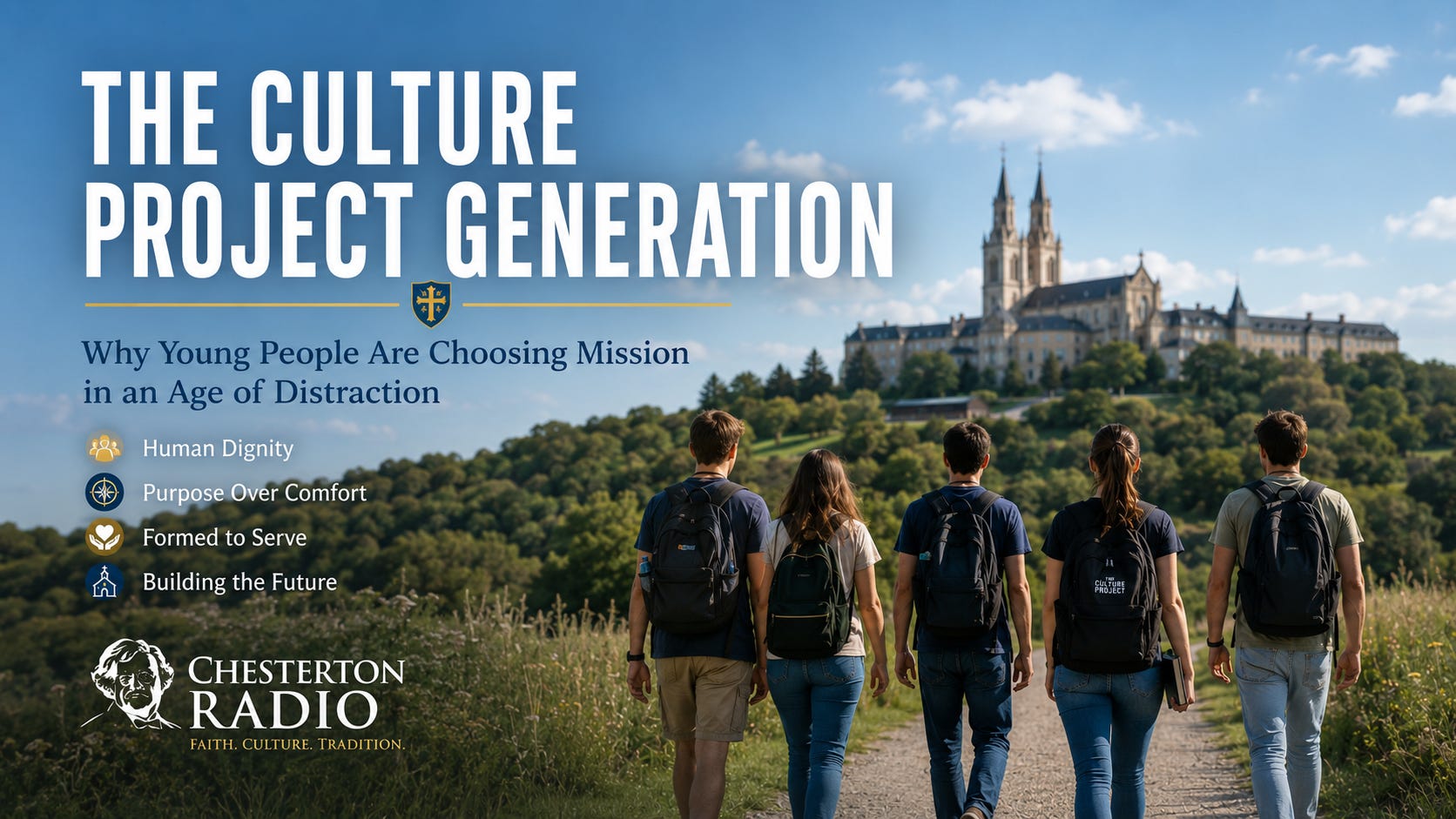
Every generation receives a label.
The Greatest Generation.
The Baby Boomers.
Generation X.
Millennials.
Generation Z.
The labels are convenient.
They help journalists write articles, marketers build campaigns, and commentators explain social trends.
Unfortunately, they are often wrong.
Or at least incomplete.
Entire generations become reduced to caricatures.
One generation is accused of selfishness.
Another of cynicism.
Another of entitlement.
Another of apathy.
The accusations change.
The pattern remains remarkably consistent.
Older generations worry about younger generations.
Younger generations frustrate older generations.
Civilization somehow survives.
Yet every so often, a narrative becomes so dominant that people begin accepting it as reality.
Over the past decade, a particular story has emerged about young adults in America.
The story appears regularly in newspapers, podcasts, social media discussions, and cultural commentary.
Young people are disconnected.
Young people avoid commitment.
Young people distrust institutions.
Young people are lonely.
Young people are anxious.
Young people are distracted.
The evidence supporting these concerns is substantial.
Rates of loneliness have increased.
Participation in community organizations has declined.
Religious affiliation has weakened in many parts of society.
Digital technology has transformed the way people communicate, work, and form relationships.
Many young adults genuinely struggle with uncertainty regarding identity, purpose, and belonging.
The challenges are real.
Yet there is another story unfolding simultaneously.
A quieter story.
A less fashionable story.
And perhaps a more hopeful one.
Across the United States, thousands of young adults are voluntarily choosing lives of service.
They are becoming missionaries.
They are joining organizations such as The Culture Project and FOCUS.
They are teaching in underserved schools.
They are entering seminaries and religious communities.
They are serving in ministries, nonprofits, and community organizations.
They are moving away from home.
They are accepting uncertainty.
They are dedicating portions of their lives to causes larger than themselves.
Most importantly, they are doing so at precisely the moment when conventional wisdom suggests they should be pursuing something else entirely.
The contradiction deserves attention.
If modern young adults are truly incapable of commitment, who are these people?
If they are interested only in themselves, why are so many choosing service?
If they reject purpose, why are so many searching for mission?
The answers reveal something important not merely about one organization or one generation, but about human nature itself.
For beneath all the discussions of technology, politics, economics, and culture lies a simple truth.
Human beings are created for meaning.
And whenever a culture struggles to provide meaning, people begin searching for it elsewhere.
The Crisis Beneath the Crisis
Much has been written about the challenges facing young adults.
The statistics are familiar.
Mental health concerns continue to rise.
Loneliness has become a national concern.
Many young people report feeling isolated despite unprecedented digital connectivity.
Trust in institutions has declined.
Religious participation has weakened.
Social fragmentation has increased.
These realities are often described as separate problems.
In truth, they may be symptoms of a deeper issue.
Human beings need belonging.
They need purpose.
They need communities that provide identity and direction.
For most of history, these needs were addressed through a network of institutions that connected individuals to something larger than themselves.
Families provided belonging.
Churches provided meaning.
Communities provided relationships.
Schools provided formation.
Civic organizations provided opportunities for service.
None of these institutions were perfect.
Yet together they created a framework through which individuals understood their place in the world.
Modern life has altered that framework dramatically.
Technology has created extraordinary opportunities.
It has also weakened certain forms of community.
Individuals now possess unprecedented freedom.
They can move almost anywhere.
Work almost anywhere.
Communicate with almost anyone.
Access nearly unlimited information.
Yet freedom alone cannot answer life’s deepest questions.
Indeed, freedom often intensifies them.
The more options people possess, the more important purpose becomes.
Without purpose, freedom can become paralysis.
Without meaning, opportunity can become anxiety.
Without belonging, independence can become isolation.
This reality helps explain why so many young adults describe themselves as overwhelmed.
The problem is not merely that they have too few choices.
The problem is that they have too many.
Every path remains open.
Every possibility remains available.
Every commitment appears negotiable.
The result is often uncertainty rather than fulfillment.
Modern culture frequently responds by encouraging further self-exploration.
Find yourself.
Express yourself.
Define yourself.
Reinvent yourself.
Again, there is value in self-understanding.
But there is also a limitation.
A person can spend an entire lifetime searching inward and never discover purpose.
Purpose is often found outward.
In service.
In responsibility.
In commitment.
In answering needs beyond oneself.
This insight is ancient.
Yet it feels surprisingly radical today.
The great religious traditions understood it.
The great philosophical traditions understood it.
Chesterton understood it.
Human beings do not discover themselves primarily through self-absorption.
They discover themselves through self-gift.
The mother discovers herself through motherhood.
The teacher discovers herself through teaching.
The physician discovers himself through healing.
The missionary discovers himself through service.
Identity emerges through vocation.
This understanding helps explain the appeal of organizations like The Culture Project.
Young adults are not simply joining a program.
They are responding to a hunger.
A hunger for purpose.
A hunger for mission.
A hunger for lives that matter.
And that hunger may be far more widespread than most observers realize.
The Culture Project and the Theology of Human Dignity
To understand why The Culture Project has attracted so many young adults, one must first understand the problem it is attempting to address.
The problem is not merely political.
It is not primarily educational.
It is not even fundamentally technological.
At its deepest level, the problem is anthropological.
In other words, it concerns what it means to be human.
For centuries, Western civilization operated upon certain assumptions about the human person. Those assumptions were not always perfectly lived. They were frequently debated. Yet they provided a common framework for understanding life, relationships, family, responsibility, and community.
Human beings possessed inherent dignity.
Human life carried value.
Love involved sacrifice.
Freedom carried responsibilities.
Relationships required commitment.
The body and the soul belonged together.
These ideas shaped institutions, laws, educational systems, and cultural expectations.
Over time, however, many of these assumptions weakened.
The change did not occur all at once.
Cultural transformations rarely do.
Instead, a series of subtle shifts gradually altered how people understood themselves.
The individual became increasingly detached from family, community, and tradition.
Freedom became defined less as the ability to pursue the good and more as the absence of limitations.
Identity became viewed as something to be invented rather than discovered.
Relationships became increasingly transactional.
Commitment became increasingly conditional.
The consequences of these changes continue to unfold.
One need not be particularly religious to observe them.
The evidence appears throughout society.
Young people report uncertainty about identity.
Relationships become more fragile.
Loneliness increases.
Mental health concerns grow.
Many people possess unprecedented opportunities while simultaneously struggling to answer basic questions about purpose and belonging.
The paradox is striking.
The culture speaks constantly about self-expression.
Yet many individuals remain uncertain about who they are.
The culture celebrates freedom.
Yet many feel trapped by anxiety.
The culture offers endless forms of connection.
Yet loneliness continues to rise.
Something deeper appears to be missing.
The founders of The Culture Project recognized this reality.
Their response was surprisingly simple.
Rather than beginning with politics, they began with anthropology.
Rather than asking what policies should change, they asked how people understand themselves.
Rather than focusing solely upon behavior, they focused upon identity.
At the center of their work lies a conviction that has shaped Christian civilization for centuries.
Every human person possesses inherent dignity.
The statement appears simple.
It is also revolutionary.
For if every person possesses dignity, then human beings cannot be reduced to objects.
They cannot be reduced to consumers.
They cannot be reduced to political categories.
They cannot be reduced to economic units.
They cannot be reduced to their utility.
Their value exists prior to achievement, success, wealth, popularity, or productivity.
They possess worth simply because they are human.
This principle has profound implications.
It changes how people view relationships.
It changes how they view sexuality.
It changes how they view family.
It changes how they view service.
Most importantly, it changes how they view themselves.
The Culture Project communicates this message primarily through personal encounter.
Its missionaries visit schools, youth groups, parishes, conferences, and communities. They engage students in conversations about identity, purpose, relationships, and human dignity.
At first glance, such conversations might appear unusual.
Yet their popularity suggests something important.
Young people are asking these questions.
Indeed, they may be asking them more intensely than previous generations.
Modern culture often provides information without wisdom.
It provides stimulation without direction.
It provides options without guidance.
The result is a generation that frequently possesses tremendous knowledge while simultaneously searching for meaning.
This is where the concept of human dignity becomes unexpectedly powerful.
It provides a foundation.
It offers an answer to a question that many young people quietly carry.
Why do I matter?
The modern world frequently attempts to answer this question through achievement.
You matter because of what you accomplish.
You matter because of your success.
You matter because of your influence.
You matter because of your productivity.
The problem with these answers is that they are fragile.
Success can disappear.
Influence can fade.
Careers can change.
Achievements eventually pass.
A person’s worth cannot safely depend upon circumstances that are constantly changing.
The Christian understanding of human dignity offers a different answer.
You matter because you are human.
You matter because your life possesses inherent value.
You matter before achievement.
You matter before success.
You matter before recognition.
You matter before anyone notices you at all.
This message resonates because it addresses a profound human need.
People want to know that their lives possess meaning independent of performance.
They want to know that they are loved before they are successful.
They want to know that they belong before they have proven themselves.
These desires are not weaknesses.
They are reflections of human nature.
Every civilization must eventually answer them.
The answer offered by The Culture Project is rooted in a tradition extending back centuries, yet it often feels surprisingly countercultural in the modern world.
Perhaps that is why so many young adults find it compelling.
They have spent much of their lives being told to build a brand.
To cultivate an image.
To optimize a profile.
To curate an identity.
The Culture Project proposes something different.
It proposes that identity is not a product.
It is a gift.
It proposes that freedom is not the ability to do anything whatsoever.
It is the ability to choose what is good.
It proposes that love is not merely a feeling.
It is a commitment.
It proposes that happiness is not found through endless self-focus.
It is discovered through self-gift.
These ideas are not always easy.
They demand sacrifice.
They require responsibility.
They challenge prevailing assumptions.
Yet they also provide something increasingly rare.
They provide coherence.
A person who understands human dignity possesses a framework for understanding relationships.
A person who understands vocation possesses a framework for understanding purpose.
A person who understands service possesses a framework for understanding fulfillment.
Together, these ideas create a vision of human flourishing that extends far beyond individual success.
And that vision helps explain why organizations like The Culture Project continue attracting young missionaries willing to dedicate portions of their lives to sharing it.
For they have discovered something that previous generations understood instinctively.
People do not merely need information.
They need meaning.
They do not merely need opportunities.
They need purpose.
And they do not merely need freedom.
They need something worth giving their freedom to.
That realization leads directly to one of the most surprising developments in contemporary Catholic life.
For despite all the predictions about declining commitment and fading idealism, a growing number of young adults are voluntarily choosing lives of service.
The question is not whether such people exist.
The question is why there seem to be so many of them.
Why Young People Still Choose Mission
One of the most persistent myths about modern young adults is that they fear commitment.
The evidence appears convincing at first glance.
Marriage is delayed.
Institutional participation has declined.
Many young adults change jobs more frequently than previous generations.
Trust in organizations has weakened.
The average observer could be forgiven for concluding that commitment itself has become unfashionable.
Yet a closer examination reveals something more complicated.
Young people have not abandoned commitment.
They have become more selective about what deserves it.
This distinction matters.
For decades, many institutions assumed loyalty would come automatically. Families belonged to churches because previous generations had belonged to them. Employees remained with companies because stability was expected. Communities inherited traditions because alternatives were limited.
The modern world changed those assumptions.
Technology expanded choices.
Geography became less restrictive.
Information became abundant.
Individuals gained unprecedented freedom to evaluate competing claims upon their time, attention, and loyalty.
The result was not necessarily a rejection of commitment.
It was a demand for authenticity.
Young adults increasingly want to know whether an institution genuinely believes what it claims to believe.
They want to know whether leaders practice what they preach.
They want to know whether a mission is real.
They want to know whether a cause is worth sacrifice.
This shift helps explain why organizations like The Culture Project continue attracting talented young people.
The organization asks something substantial of its missionaries.
It requires time.
It requires effort.
It requires personal sacrifice.
It often requires moving away from familiar surroundings and comfortable routines.
These demands would seem unattractive if comfort were the highest priority.
Yet comfort has never been enough.
Human beings can tolerate remarkable levels of difficulty when they believe the difficulty serves a meaningful purpose.
History provides endless examples.
Missionaries crossed oceans.
Teachers accepted modest incomes.
Parents sacrificed for children.
Physicians endured years of training.
Soldiers accepted risks.
Builders devoted decades to cathedrals they would never see completed.
The common thread was not comfort.
The common thread was meaning.
People willingly accept burdens when they believe those burdens matter.
The same principle remains true today.
Many young adults are searching for causes worthy of commitment.
They are searching for work worthy of effort.
They are searching for communities worthy of loyalty.
And perhaps most importantly, they are searching for lives worthy of sacrifice.
This search frequently surprises older generations because it unfolds in places that receive relatively little attention.
The headlines tend to focus upon polarization, division, and cultural conflict.
Meanwhile, a quieter story continues developing.
Thousands of young adults gather for conferences centered on faith and service.
Missionary organizations expand.
Catholic colleges with strong identities grow.
Classical education movements attract families.
New religious communities emerge.
Young professionals organize service initiatives.
Parishes build thriving young adult programs.
The activity is not universal.
It is not dominant.
But it is real.
And it points toward something deeply encouraging.
The desire for meaning has not disappeared.
If anything, it has intensified.
One reason may be that modern society has become extraordinarily effective at satisfying lesser desires while leaving greater desires untouched.
Entertainment has never been more accessible.
Convenience has never been more abundant.
Information has never been more available.
Yet many people continue feeling restless.
The reason is not difficult to understand.
Human beings were never meant to live on convenience alone.
A comfortable life is not necessarily a meaningful life.
An entertaining life is not necessarily a fulfilling life.
A successful life is not necessarily a purposeful life.
Eventually, individuals begin asking larger questions.
What am I here for?
What should I do with my talents?
Who needs me?
What is worth dedicating my life to?
These questions emerge naturally because they correspond to something fundamental within human nature.
People want significance.
They want contribution.
They want purpose.
The Culture Project appeals to this desire because it presents mission as an answer rather than a burden.
Its missionaries are not merely avoiding other opportunities.
They are choosing something.
They are choosing service.
They are choosing witness.
They are choosing to invest themselves in the lives of others.
This perspective transforms sacrifice.
A sacrifice made for no reason feels oppressive.
A sacrifice made for a worthy purpose feels meaningful.
Parents understand this instinctively.
So do teachers.
So do physicians.
So do missionaries.
The effort remains real.
The purpose changes everything.
This reality also helps explain why organizations like The Culture Project often attract graduates from places such as Benedictine College, Newman Guide institutions, and Chesterton Academies.
These educational communities frequently emphasize vocation alongside achievement.
Students are encouraged to pursue excellence.
They are also encouraged to ask why excellence matters.
The question shifts from personal success to personal mission.
The difference may appear subtle.
In practice, it changes entire lives.
A student who views education solely as career preparation asks, “What can this degree do for me?”
A student who views education as formation asks, “What can I do with this education?”
One question looks inward.
The other looks outward.
The distinction helps explain why so many graduates leave these institutions and enter service-oriented professions.
They become teachers.
They become healthcare workers.
They become missionaries.
They become community leaders.
They become parents dedicated to raising the next generation.
Not because they reject ambition.
But because their ambitions have been directed toward something larger than themselves.
This is the story that often goes unnoticed.
The culture frequently assumes that young adults are withdrawing from responsibility.
Yet countless examples suggest the opposite.
Many are actively searching for responsibility.
What they reject are responsibilities that seem arbitrary, hollow, or disconnected from purpose.
What they embrace are missions that provide meaning.
This distinction may prove enormously important in the years ahead.
For every society eventually depends upon people willing to serve something greater than themselves.
Communities require such people.
Schools require such people.
Churches require such people.
Families require such people.
Civilizations require such people.
The future belongs not merely to those who accumulate the most resources or achieve the greatest visibility.
The future belongs to those willing to build.
To teach.
To heal.
To lead.
To sacrifice.
To serve.
And despite all the reasons for pessimism that modern life occasionally supplies, there remain thousands of young men and women quietly making those choices every day.
They may not dominate social media.
They may never become famous.
Most will never appear in history books.
Yet their influence may ultimately prove more significant than many realize.
For every generation is shaped not only by its critics, commentators, and celebrities.
It is shaped by its missionaries.
And that may be one of the most hopeful realities of our time.
The Institutions That Form Missionaries
No generation produces missionaries by accident.
Nor does it produce teachers, physicians, priests, religious sisters, community leaders, or people willing to dedicate themselves to service by accident.
Such individuals emerge from somewhere.
They are formed.
This fact is easy to overlook because formation rarely attracts attention.
The world notices the missionary standing on a stage.
It notices the physician treating patients.
It notices the teacher leading a classroom.
What it often misses are the countless people and institutions that helped make those vocations possible.
Parents.
Schools.
Churches.
Mentors.
Friends.
Communities.
Behind every life devoted to service stands an entire network of people who invested in that life long before anyone else recognized its potential.
This truth becomes particularly important when considering organizations like The Culture Project.
Observers sometimes focus exclusively upon the missionaries themselves.
Yet the more interesting question may be where those missionaries come from.
Increasingly, many seem to emerge from a common ecosystem.
Catholic families.
Classical schools.
Chesterton Academies.
Newman Guide institutions.
Faithful colleges such as Benedictine.
Parishes that take formation seriously.
Communities that encourage young people to think not merely about careers but about vocation.
The pattern is difficult to ignore.
These institutions differ in size, history, geography, and emphasis.
Yet they share certain assumptions.
They believe truth exists.
They believe human dignity is real.
They believe education involves character as well as knowledge.
They believe freedom carries responsibilities.
They believe service matters.
Most importantly, they believe that young people are capable of greatness.
Not celebrity.
Not fame.
Not influence.
Greatness.
The distinction matters.
Modern culture often equates greatness with visibility.
The person with the largest audience wins.
The person with the most followers matters.
The person with the greatest reach succeeds.
Yet history suggests otherwise.
Many of the most influential people who have ever lived possessed relatively little public visibility.
A teacher influences hundreds of students.
A physician influences thousands of patients.
A missionary influences countless conversations.
A parent influences an entire generation through the children entrusted to their care.
These forms of influence rarely make headlines.
Yet they shape civilizations.
The institutions that produce such people understand something increasingly countercultural.
Human beings do not become their best selves through self-absorption.
They become their best selves through formation.
The word itself has largely disappeared from modern educational language.
We speak about training.
We speak about skills.
We speak about competencies.
We speak about outcomes.
All of these things matter.
Yet formation remains different.
Training teaches a person what to do.
Formation helps determine who that person becomes.
The distinction may be one of the most important educational questions of our time.
For generations, schools largely assumed that character formation belonged alongside intellectual development.
Students learned mathematics.
They also learned responsibility.
Students learned literature.
They also learned virtue.
Students learned history.
They also learned citizenship.
Education was understood as preparation for life rather than merely preparation for employment.
Many institutions still embrace this vision.
Others have moved away from it.
The consequences are becoming increasingly visible.
Parents search for schools that align with their values.
Students seek communities that provide meaning.
Young adults look for mentors who can help them navigate questions of purpose and identity.
The demand exists because the need exists.
Human beings naturally seek formation.
If formal institutions fail to provide it, other influences will.
Social media will.
Entertainment will.
Peer groups will.
Algorithms will.
The question is never whether young people will be formed.
The question is by whom.
This reality helps explain the growth of institutions that take formation seriously.
Families recognize that information alone is insufficient.
Knowledge matters.
Character matters too.
Achievement matters.
Purpose matters too.
Success matters.
Meaning matters too.
The strongest educational communities refuse to treat these goals as competing priorities.
They understand that human flourishing requires all of them.
Benedictine College has become one of the most visible examples of this approach.
The college’s success is often discussed in terms of enrollment growth, campus development, academic programs, and institutional momentum.
Those achievements are certainly noteworthy.
Yet they may not be the most important measure of success.
A more revealing measure may be the kinds of graduates the institution produces.
Graduates who become physicians.
Graduates who become teachers.
Graduates who become business leaders.
Graduates who become missionaries.
Graduates who enter communities carrying a sense of vocation rather than merely a profession.
The same observation applies to the broader movement surrounding faithful Catholic education.
The ultimate test of a school is not its marketing materials.
The ultimate test is its alumni.
What kind of people emerge from the institution?
What sort of lives do they build?
What responsibilities do they embrace?
What communities do they strengthen?
What missions do they undertake?
These questions matter because institutions are not ends in themselves.
They exist to form people.
And people, in turn, shape the future.
This is why stories like The Keeper’s resonate so deeply.
Not because one missionary changes the world overnight.
Not because one graduate represents an entire generation.
But because such stories reveal something larger.
They reveal that formation still works.
Parents still matter.
Teachers still matter.
Mentors still matter.
Schools still matter.
Communities still matter.
The chain linking one generation to the next remains intact.
And in an age when so many institutions appear uncertain of their purpose, that realization is remarkably encouraging.
For every missionary standing before a classroom once sat in a classroom.
Every leader was once a student.
Every teacher was once taught.
Every person serving a mission today was once formed by someone who believed that formation was worth the effort.
The future of any civilization ultimately depends upon whether such people continue to exist.
Fortunately, they do.
And they continue their work every day, often unnoticed, preparing the next generation of young men and women who will someday step forward and answer a call of their own.
The missionaries may receive the attention.
The institutions that formed them deserve some of the credit.
For without those institutions, the mission field would be far emptier than it is today.
A Different Kind of Success
Every society eventually decides what it chooses to celebrate.
The decision is not always explicit.
Few cultures gather together and formally announce their priorities.
Instead, values reveal themselves through attention.
Who receives admiration?
Who receives publicity?
Who receives recognition?
Who becomes a model for the next generation?
The answers tell us a great deal about what a culture truly believes.
Modern society often celebrates visibility.
The entrepreneur who builds a company.
The athlete who wins a championship.
The entertainer who attracts millions of followers.
The influencer who commands attention.
None of these achievements are inherently bad.
Excellence deserves recognition.
Talent deserves appreciation.
Hard work deserves respect.
Yet problems arise when visibility becomes confused with significance.
For some of the most important work in human civilization occurs far from public attention.
A teacher spends thirty years shaping students who will eventually become physicians, engineers, parents, and leaders.
A parish priest faithfully serves a community for decades.
A physician quietly cares for thousands of patients whose names will never appear in headlines.
A mother and father devote years to raising children who may someday influence countless others.
These lives rarely generate national attention.
Their impact is nevertheless enormous.
Indeed, civilization depends upon such people.
Chesterton understood this better than most.
One of his recurring themes was that modern society often notices the spectacular while overlooking the essential.
It celebrates the unusual while taking the ordinary for granted.
It becomes fascinated with novelty while forgetting the institutions and relationships that make ordinary life possible.
The result is a distorted understanding of success.
Success becomes associated primarily with recognition.
The truly successful life becomes the visible life.
The important life becomes the public life.
The meaningful life becomes the influential life.
And yet experience continually contradicts these assumptions.
Most people can identify individuals who profoundly shaped their lives.
A teacher.
A coach.
A pastor.
A parent.
A mentor.
A friend.
Rarely are these people famous.
Often they are barely known outside their immediate communities.
Yet their influence exceeds that of many celebrities.
The reason is simple.
Influence measured by attention and influence measured by transformation are not the same thing.
One attracts audiences.
The other changes lives.
Organizations like The Culture Project operate upon this second understanding of influence.
Their missionaries are not attempting to become famous.
They are attempting to become useful.
They are not building personal brands.
They are building relationships.
They are not seeking attention for its own sake.
They are seeking opportunities to serve.
This distinction may explain why their work resonates with so many young adults.
Beneath all the noise of modern life, many people remain unconvinced that attention is the highest good.
They remain unconvinced that influence should be measured by follower counts.
They remain unconvinced that the purpose of life is self-promotion.
Instead, they continue searching for ways to make a genuine difference.
The search frequently leads them toward service.
It leads them toward teaching.
It leads them toward healthcare.
It leads them toward ministry.
It leads them toward mission.
The pattern appears repeatedly throughout history.
When societies become excessively focused upon status, a counter-movement inevitably emerges.
People begin searching for substance.
When societies become consumed by spectacle, people begin searching for authenticity.
When societies become obsessed with self-expression, people begin searching for self-gift.
The Culture Project belongs to this tradition.
Its appeal extends beyond any particular program, presentation, or missionary initiative.
At its heart lies a challenge to one of the most powerful assumptions of modern life.
The assumption that fulfillment is found by focusing primarily upon oneself.
The missionaries propose something different.
They suggest that fulfillment is discovered through service.
That identity is strengthened through responsibility.
That freedom finds its purpose in love.
That human dignity provides a foundation for meaningful relationships.
These ideas are not new.
In fact, they are very old.
Yet they feel revolutionary because they challenge the prevailing cultural narrative.
Young adults respond because many have already discovered the limitations of that narrative.
They have seen what endless self-focus produces.
They have seen what happens when identity becomes disconnected from purpose.
They have seen what happens when freedom loses direction.
The results are rarely satisfying.
This helps explain why stories like The Keeper’s resonate so strongly with parents.
Parents do not merely want successful children.
They want good children.
They want young adults capable of responsibility.
They want sons and daughters who contribute to their communities.
They want them to find work that matters.
They want them to discover vocations worthy of their gifts.
Most of all, they want them to become people of character.
Character remains one of the few forms of success that never loses value.
Markets change.
Careers change.
Technology changes.
Public recognition comes and goes.
Character endures.
A person of character strengthens every institution they enter.
Every family.
Every school.
Every parish.
Every community.
Every workplace.
The future of society depends less upon technological innovation than many people imagine and more upon the formation of such individuals.
This truth is both encouraging and demanding.
It is encouraging because it reminds us that renewal remains possible.
It is demanding because it requires effort.
Formation takes time.
Mission requires sacrifice.
Character develops gradually.
There are no shortcuts.
Yet the investment continues because the results matter.
Every generation receives an inheritance.
Every generation decides what to do with it.
Some merely consume it.
Others preserve it.
The best generations strengthen it and pass it forward.
The young missionaries serving through organizations like The Culture Project are attempting to do precisely that.
Whether they realize it or not, they are participating in a much older story.
A story about passing wisdom from one generation to the next.
A story about preserving human dignity in every age.
A story about reminding people that their lives possess meaning.
And a story about proving that success, properly understood, has always been measured by something far greater than attention.
It is measured by service.
And service remains one of the most powerful forces in the world.
The Generation Nobody Expected
Every generation eventually surprises its critics.
History is filled with examples.
Young people dismissed as irresponsible become devoted parents.
Young people accused of idealism become practical leaders.
Young people described as apathetic become reformers, builders, and servants.
The pattern repeats because every generation contains possibilities that statistics alone cannot measure.
Human beings are more than demographic categories.
They are more than surveys, trends, and cultural predictions.
They possess the capacity to choose.
And sometimes those choices confound conventional wisdom.
The current generation of young adults may be doing exactly that.
For years, the dominant narrative has focused almost exclusively on decline.
Declining trust.
Declining participation.
Declining religious affiliation.
Declining confidence in institutions.
The concerns are real.
They deserve serious attention.
Yet focusing exclusively on decline can obscure another reality.
Renewal is occurring at the same time.
Not everywhere.
Not uniformly.
But unmistakably.
One sees it in the growth of faithful Catholic colleges.
One sees it in the rise of Chesterton Academies and classical education.
One sees it in Newman Guide schools.
One sees it in organizations such as The Culture Project and FOCUS.
One sees it in young adults willing to devote years of their lives to service.
One sees it in parents intentionally seeking something different for their children.
The story is not one of perfection.
No generation is perfect.
No institution is perfect.
No movement is perfect.
The story is one of hunger.
A hunger for meaning.
A hunger for purpose.
A hunger for truth.
A hunger for community.
A hunger for lives that matter.
These desires are profoundly human.
They emerge whenever people discover that comfort alone is insufficient.
That entertainment alone is insufficient.
That achievement alone is insufficient.
Eventually, every person encounters a question that cannot be ignored forever.
What is my life for?
The answer shapes everything.
It shapes careers.
It shapes relationships.
It shapes communities.
It shapes civilizations.
The most hopeful aspect of organizations like The Culture Project is not that they provide all the answers.
The most hopeful aspect is that they encourage young people to ask the right questions.
Questions about dignity.
Questions about vocation.
Questions about love.
Questions about service.
Questions about purpose.
Such questions have a remarkable way of changing lives.
For a person who discovers purpose begins making different decisions.
A person who discovers vocation begins evaluating success differently.
A person who discovers mission begins viewing sacrifice differently.
What once appeared burdensome begins to feel meaningful.
What once seemed restrictive begins to feel liberating.
What once seemed ordinary begins to reveal extraordinary significance.
This transformation is visible throughout the communities that have quietly emerged around faithful Catholic education.
Benedictine College.
The Culture Project.
FOCUS.
Chesterton Academies.
Newman Guide schools.
Countless parishes, families, and ministries.
Though different in many respects, they share a common conviction.
Human beings are created for more than self-interest.
They are created for service.
The conviction is ancient.
Yet it remains startlingly relevant.
Modern culture frequently tells young people to build platforms.
These institutions encourage them to build lives.
Modern culture tells them to cultivate audiences.
These institutions encourage them to cultivate character.
Modern culture tells them to maximize options.
These institutions encourage them to embrace purpose.
The contrast helps explain why so many graduates emerging from these communities seem strangely hopeful.
Not naïve.
Not unaware of the challenges facing the world.
Simply hopeful.
Hopeful because they believe their lives possess meaning.
Hopeful because they believe service matters.
Hopeful because they believe truth exists.
Hopeful because they believe communities can be strengthened.
Hopeful because they believe the future remains worth building.
Such hope is not a small thing.
Indeed, it may be one of the most important resources any civilization possesses.
A society without hope becomes cynical.
A cynical society stops building.
A society that stops building eventually declines.
The opposite is also true.
A hopeful society continues investing in the future.
It continues educating.
It continues teaching.
It continues healing.
It continues serving.
It continues raising children.
It continues building institutions.
Hope becomes visible through action.
This is why stories like The Keeper’s matter.
Not because one young missionary changes the world overnight.
Not because one graduate represents an entire generation.
But because such stories remind us that formation still works.
Parents still matter.
Teachers still matter.
Schools still matter.
Faith still matters.
Mission still matters.
The chain connecting one generation to the next remains unbroken.
The future is still being handed forward.
And perhaps that is the deepest lesson of all.
The future does not belong to the loudest voices.
It does not belong to the most cynical observers.
It does not belong to those who merely critique.
The future belongs to those willing to build.
To teach.
To heal.
To serve.
To sacrifice.
To hope.
Every generation needs such people.
This generation is producing them.
Perhaps not in the places many expected.
Perhaps not in the numbers critics demand.
But they are there.
In classrooms.
In parishes.
In mission fields.
In colleges.
In communities across the country.
Quietly preparing to carry forward the work entrusted to them.
And that may be the most encouraging story of all.
For the generation so often described as distracted may ultimately be remembered for something else entirely.
It may be remembered as a generation that went searching for meaning—and found it in mission.
Postscript: The Builders of the Future
At Chesterton Radio, we spend a great deal of time looking backward.
We explore old books, forgotten radio dramas, classic music, historical figures, and the writings of G.K. Chesterton. We revisit ideas that have endured across generations and examine the institutions that helped preserve them.
Yet the purpose of looking backward is never nostalgia.
The purpose is renewal.
The great traditions of civilization are not museum pieces. They are living inheritances. Each generation receives them, strengthens them, and passes them forward.
Or fails to.
That is why stories like this one matter.
The Culture Project is not merely an organization.
Benedictine College is not merely a college.
The missionaries, students, teachers, parents, and mentors who appear throughout this essay are not merely participants in isolated programs.
Together, they are part of something larger.
They are participating in the oldest project in human history.
The formation of the next generation.
Every civilization depends upon this work.
Every family depends upon this work.
Every school, parish, community, and nation depends upon this work.
The future is never built by institutions alone.
It is built by people.
People willing to teach.
People willing to mentor.
People willing to sacrifice.
People willing to heal.
People willing to serve.
People willing to believe that the next generation is worth investing in.
One of the recurring themes at Chesterton Radio is that renewal often begins quietly.
Not through revolutions.
Not through headlines.
Not through celebrity.
Renewal begins when a parent teaches a child.
When a teacher inspires a student.
When a missionary enters a classroom.
When a physician serves a community.
When a young adult chooses mission over comfort.
Such moments rarely attract national attention.
Yet they shape the future.
Indeed, they are the future.
That is why we continue telling these stories.
Through our feature essays, Deep Dive podcasts, Daybreak broadcasts, Opening Night discussions, The Music Room, From the Wireless Archive, The Builders, and The School on the Hill series, Chesterton Radio seeks to shine a light on the people, ideas, and institutions quietly renewing faith, culture, education, and community life.
We live in an age that often rewards outrage, novelty, and distraction.
Chesterton Radio exists to explore something different.
The permanent things.
The enduring things.
The things worth building.
If you have enjoyed this essay, we invite you to become part of the Chesterton Radio community.
A free subscription ensures that future essays, podcasts, and special features arrive directly in your inbox. A paid subscription helps support the research, writing, production, hosting, and development that make this work possible. It allows us to continue creating original content while expanding our coverage of Catholic education, culture, literature, history, music, old-time radio, and the remarkable people helping to keep these traditions alive.
You can also support the mission by sharing articles with friends, recommending Chesterton Radio to fellow readers, commenting on essays, and helping introduce others to the growing Chesterton Radio family.
Every subscriber matters.
Every share matters.
Every recommendation matters.
Together, they help keep the signal alive.
For in the end, civilizations are not saved by algorithms.
They are not renewed by trends.
They are not preserved by technology alone.
They are renewed by people.
By parents who continue believing.
By teachers who continue teaching.
By missionaries who continue serving.
By students who continue searching for truth.
By institutions willing to invest in generations they may never meet.
And by readers who still believe that stories of faith, vocation, service, and hope are worth telling.
Thank you for reading.
We’ll meet you again soon—somewhere between a monastery and a mission field, a great book and a classroom, a college on a hill and a culture waiting to be renewed.
Until then, keep your lamp lit, keep your sense of wonder, and never underestimate what can happen when a generation discovers that meaning is found not in self-interest, but in mission.
— Chesterton Radio
“The true soldier fights not because he hates what is in front of him, but because he loves what is behind him.”
— G.K. Chesterton