

Introduction
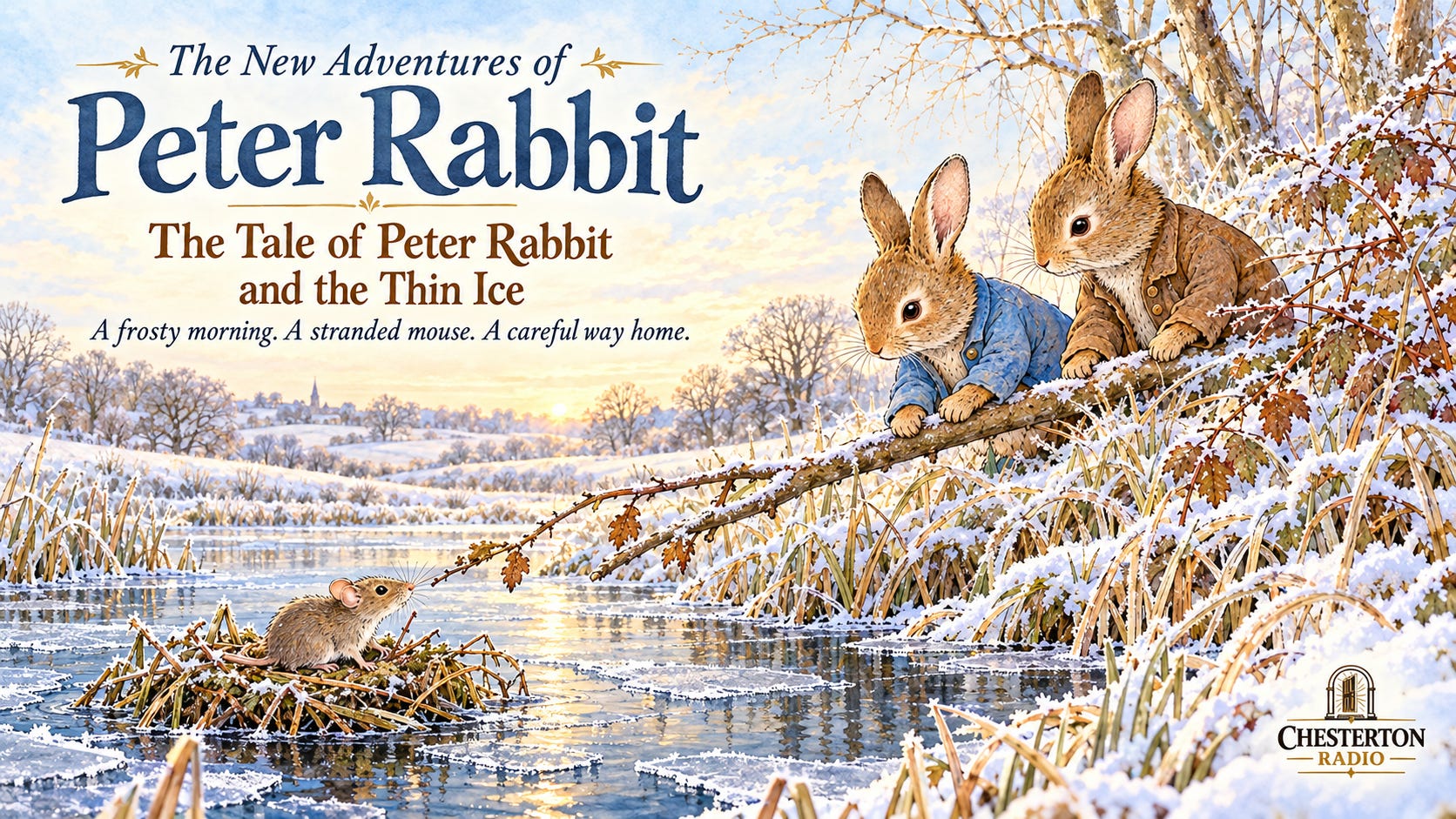
Welcome to The New Adventures of Peter Rabbit, an unofficial series of original tales featuring familiar characters from Beatrix Potter’s countryside. In this first adventure, Peter discovers that a pond can look perfectly peaceful when its ice is anything but safe.
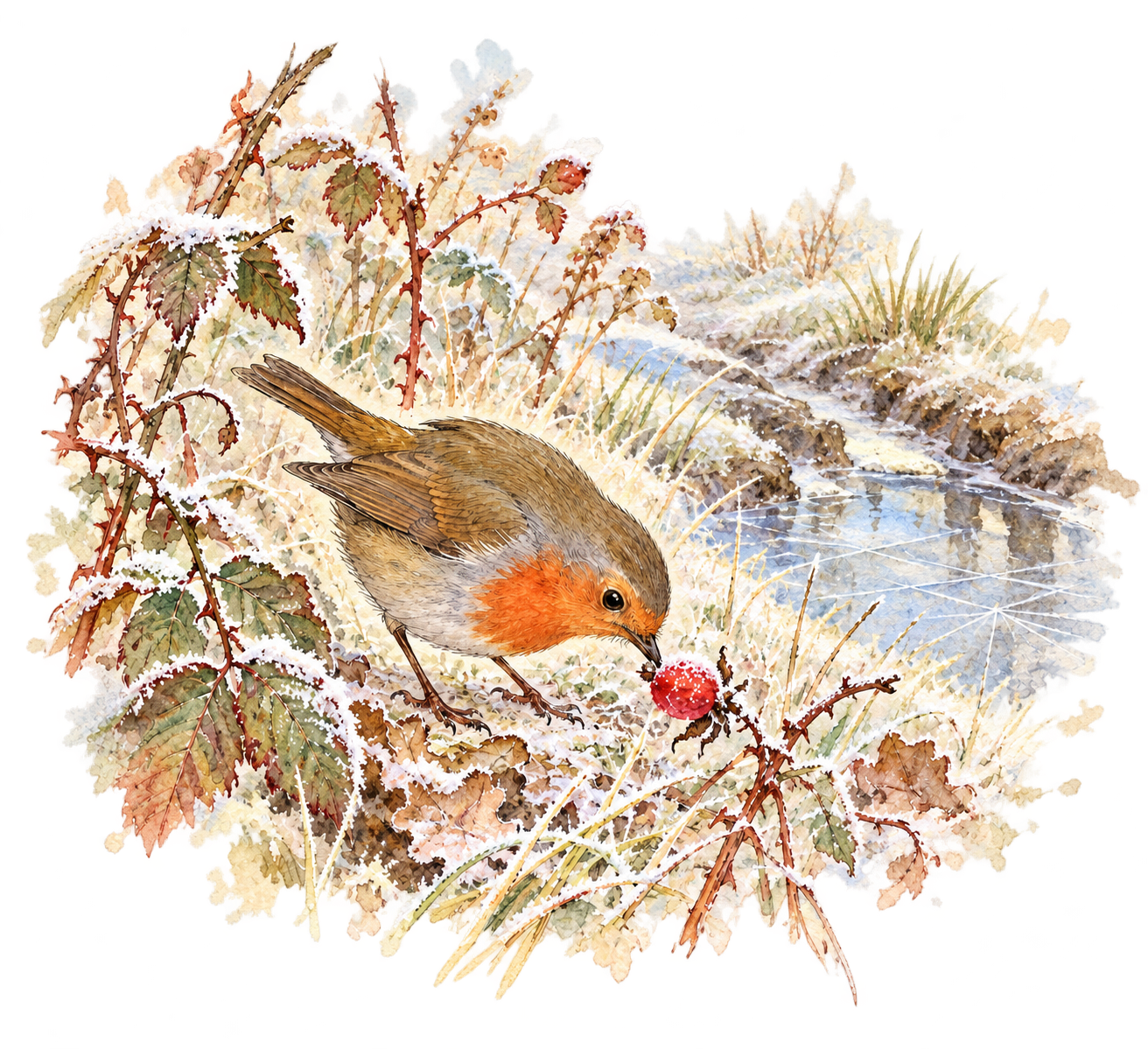
It was a very clear morning after a hard frost. The grass stood white along the bank, and the puddles in the cart ruts were covered with little plates of ice. A robin hopped about the hedge, looking for breakfast, and found a frozen berry, which he pecked once and left.
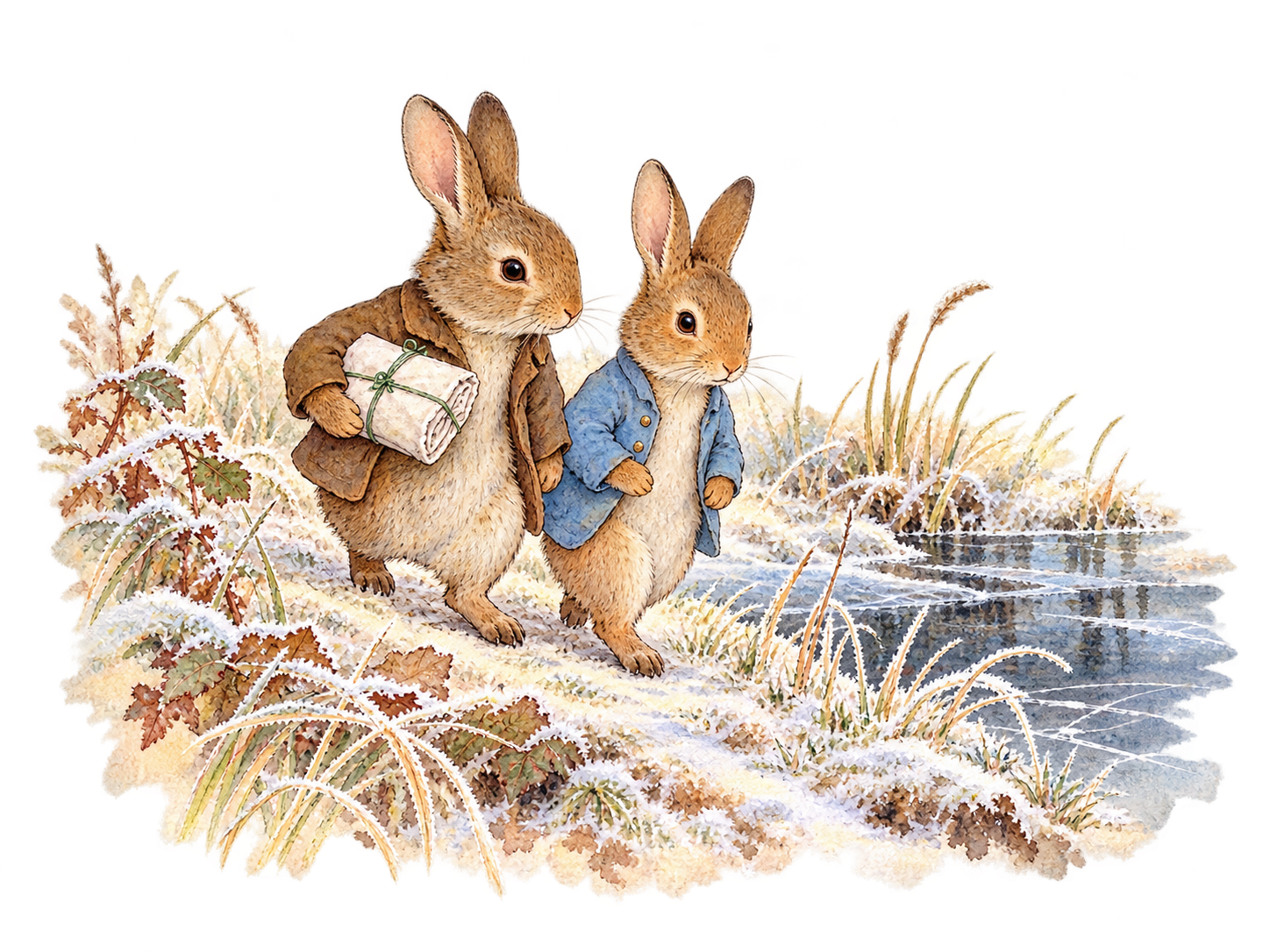
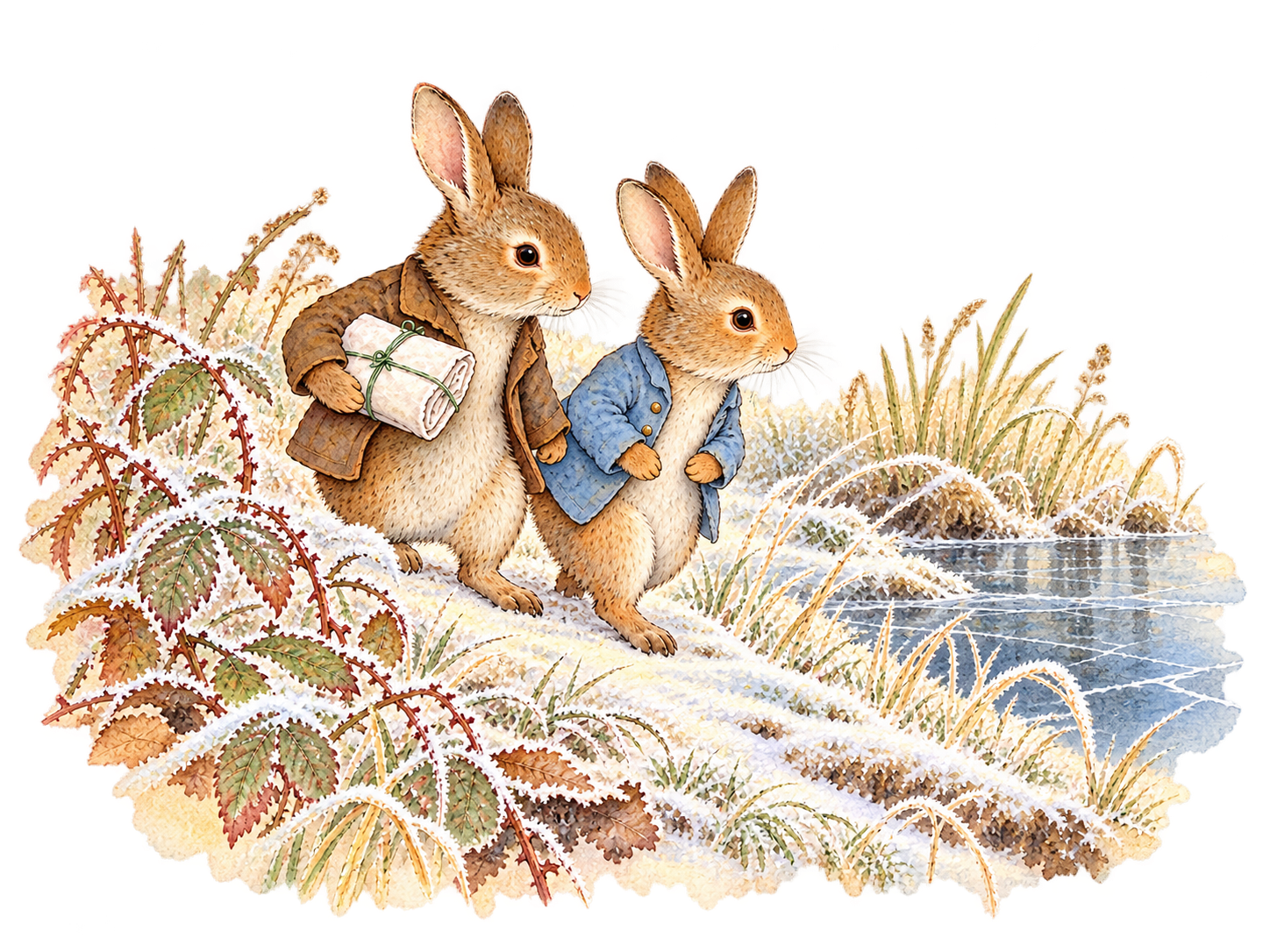
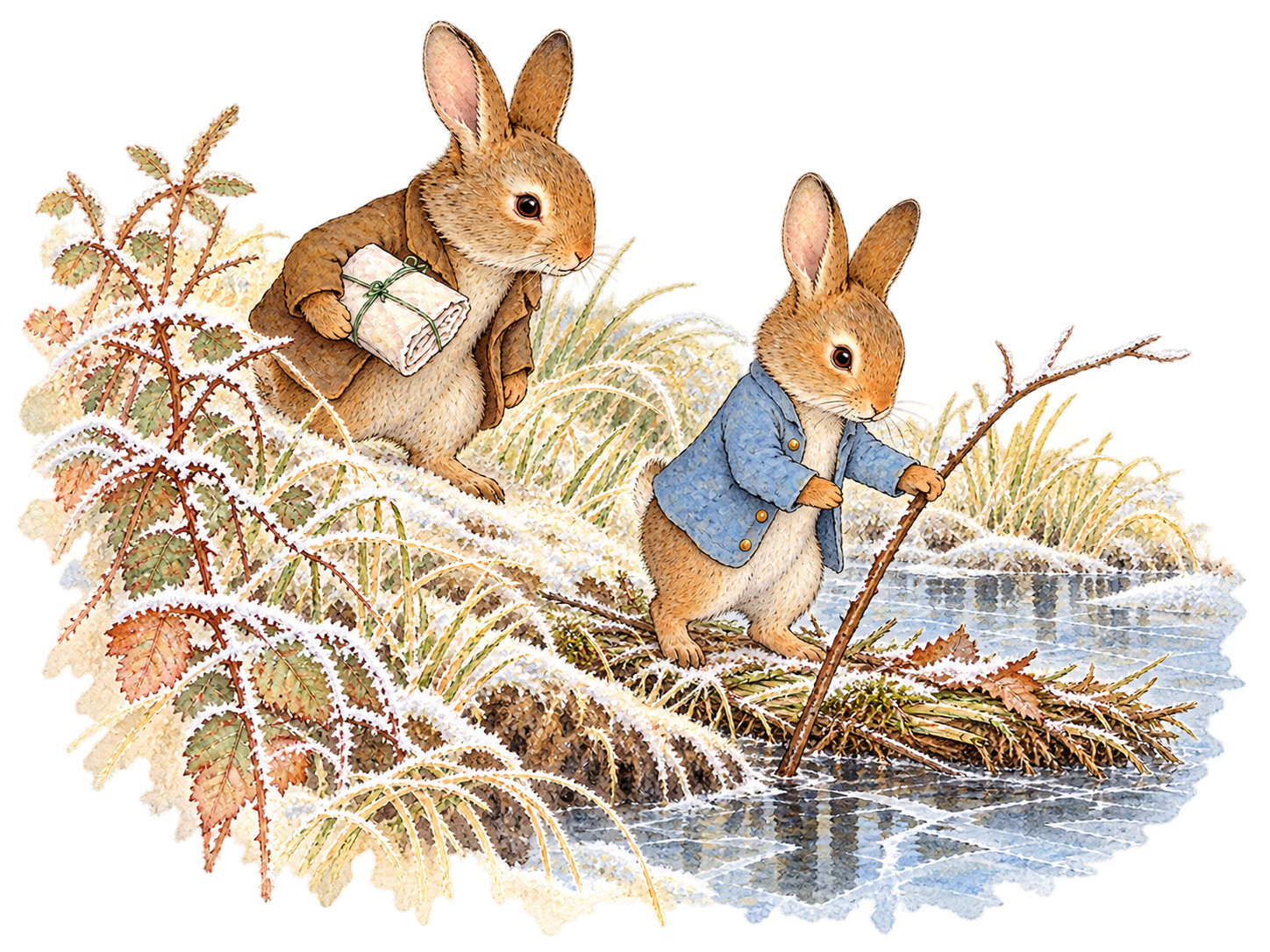
Peter Rabbit and his cousin Benjamin Bunny were going to Mrs. Tiggy-Winkle’s cottage. They carried a small parcel of clean linen, tied with green thread. Mrs. Rabbit had folded it neatly and told them to keep to the path beside the pond.
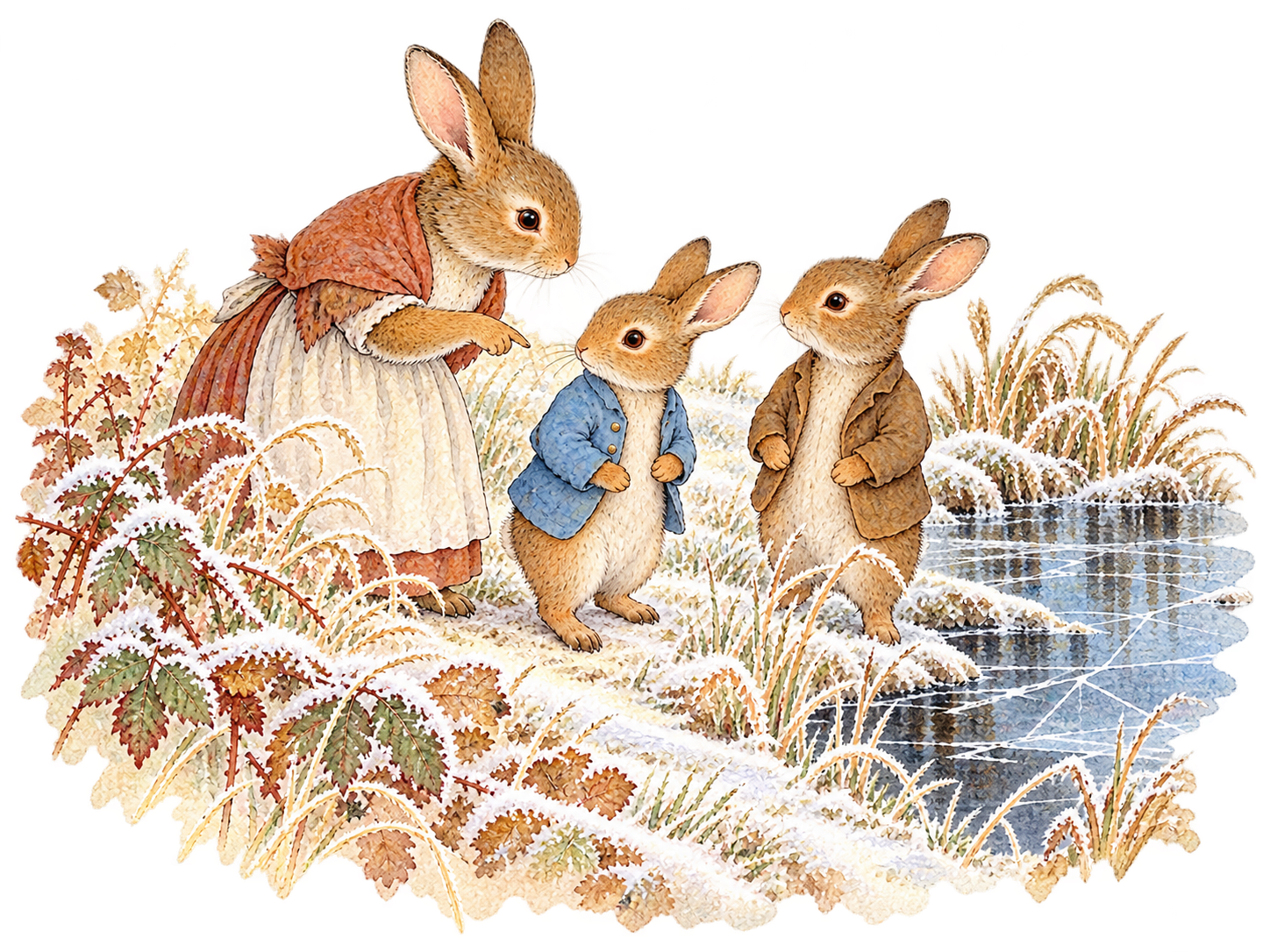
“Do not go upon the ice,” she said. “It is thin near the bank.” Benjamin said, “No, Aunt.” Peter said, “Certainly,” and looked at the pond. The path ran close beside the water. Frost had silvered the rushes and laid a white edging upon the mud.
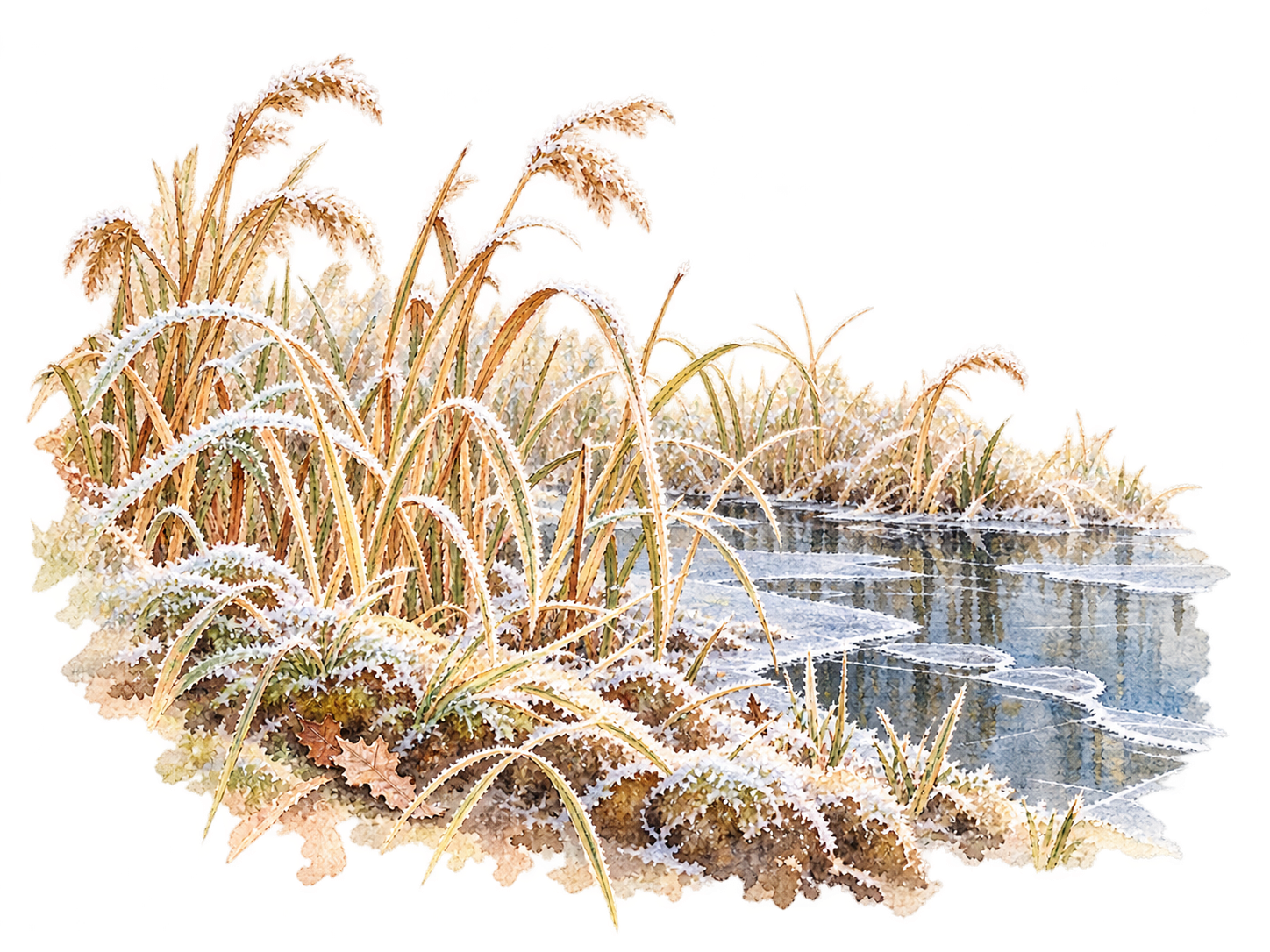
Beyond them the pond was dark, except where a skim of ice made a pale shine between the reeds. Benjamin walked with the parcel tucked under his arm. Peter stopped to look at a hazel catkin, then at a beetle lying quite still beneath a leaf.
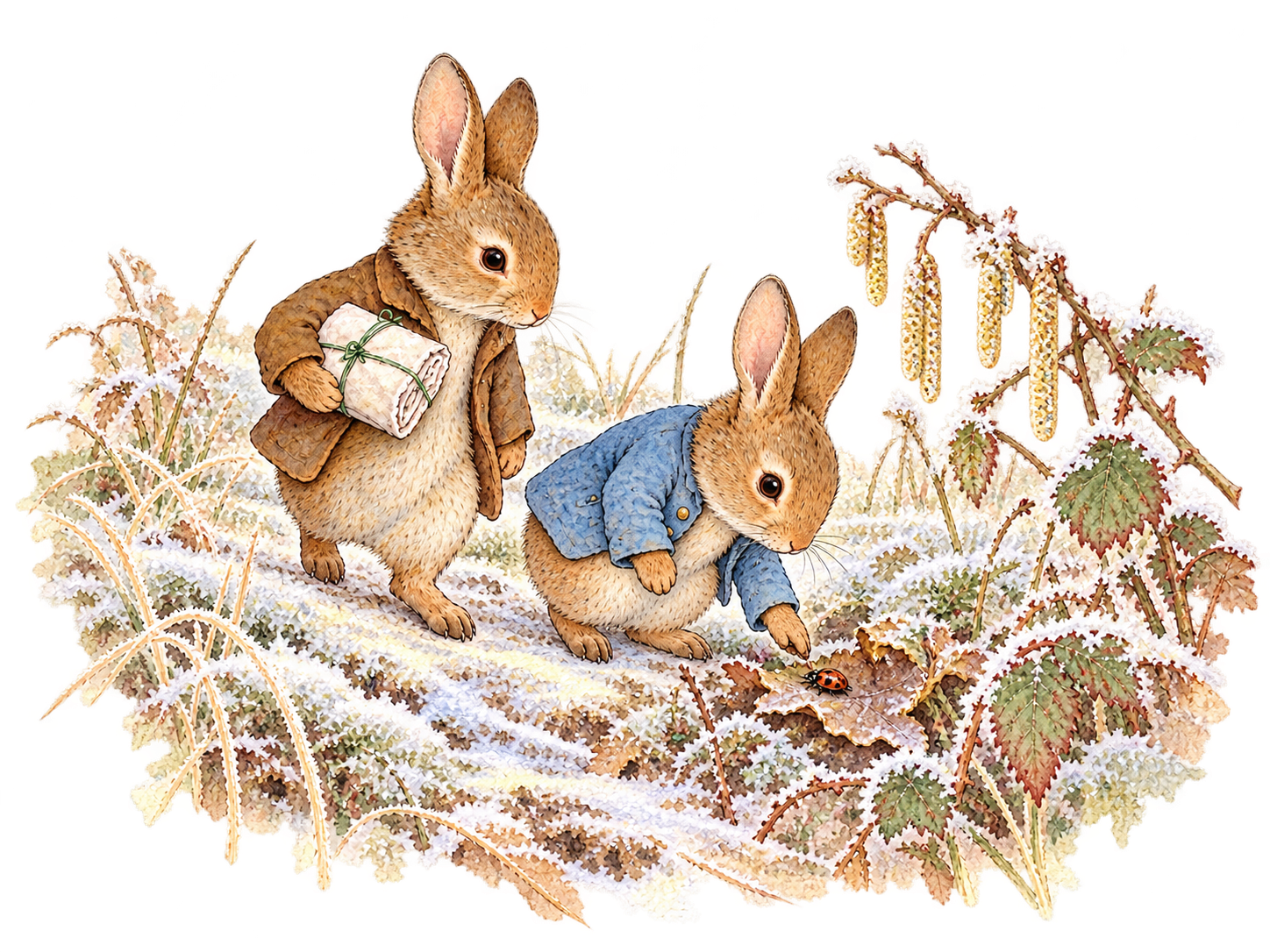
When he hurried to catch up, he had forgotten the beetle, but he had not forgotten the pond. They had nearly reached the far end when they heard a squeak. It came from a little floating tuft of roots and reeds that had broken loose from the bank.
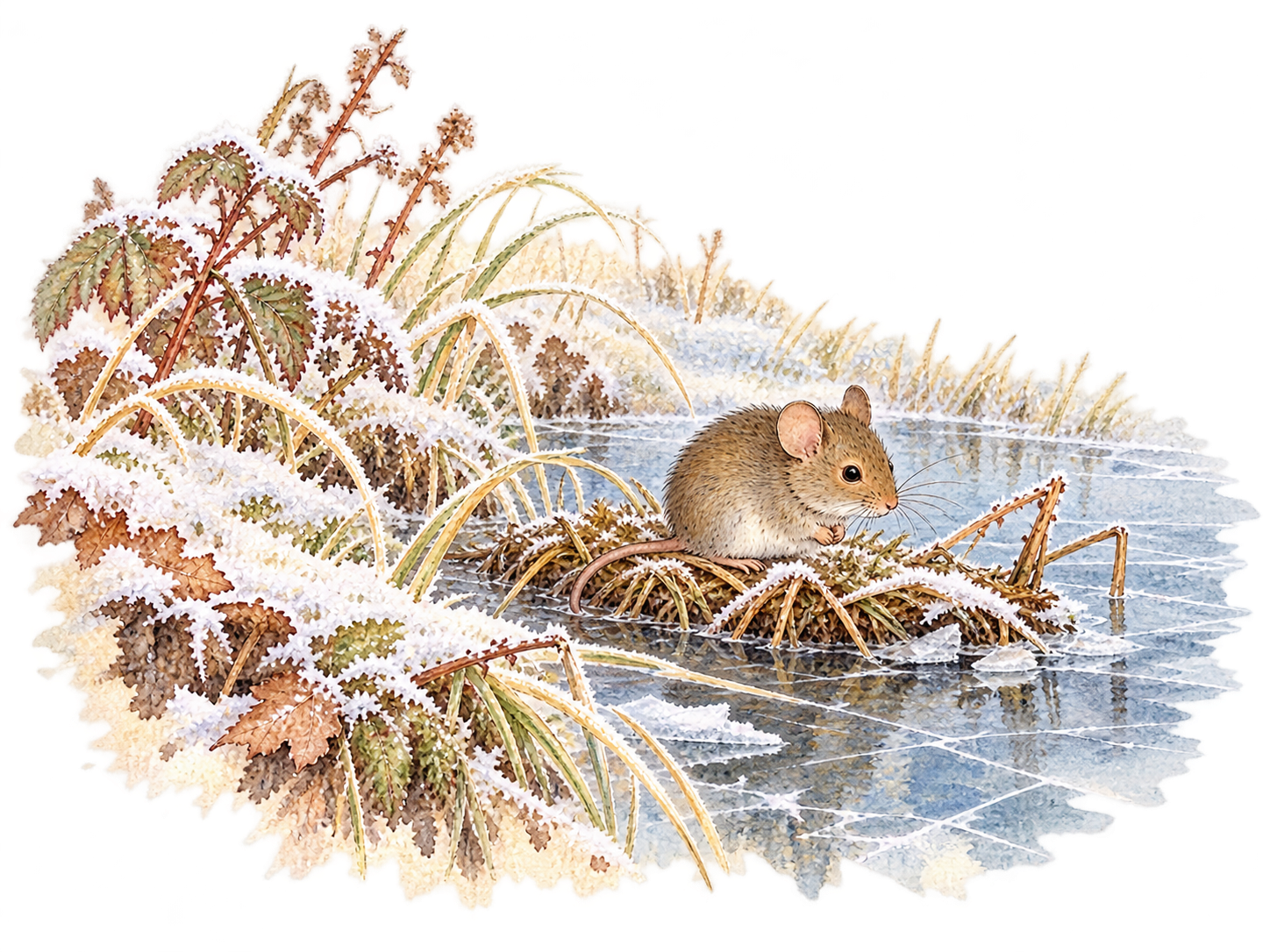
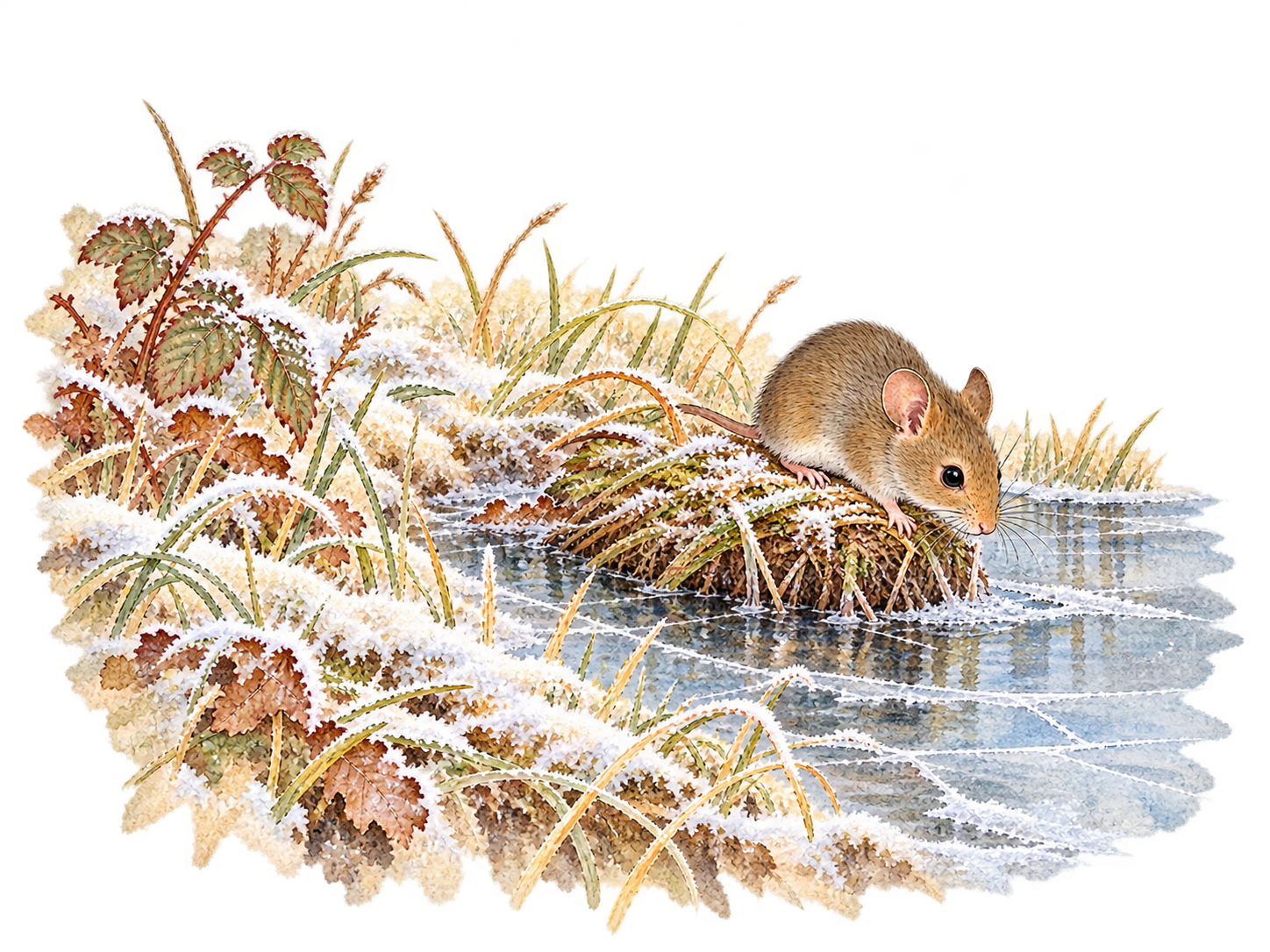
The tuft had caught against the thin ice near the shore. A field mouse sat upon it, very small and grey, with its paws tucked close and its whiskers trembling. Peter looked at the mouse. Then he looked at the grass between the bank and the little raft.
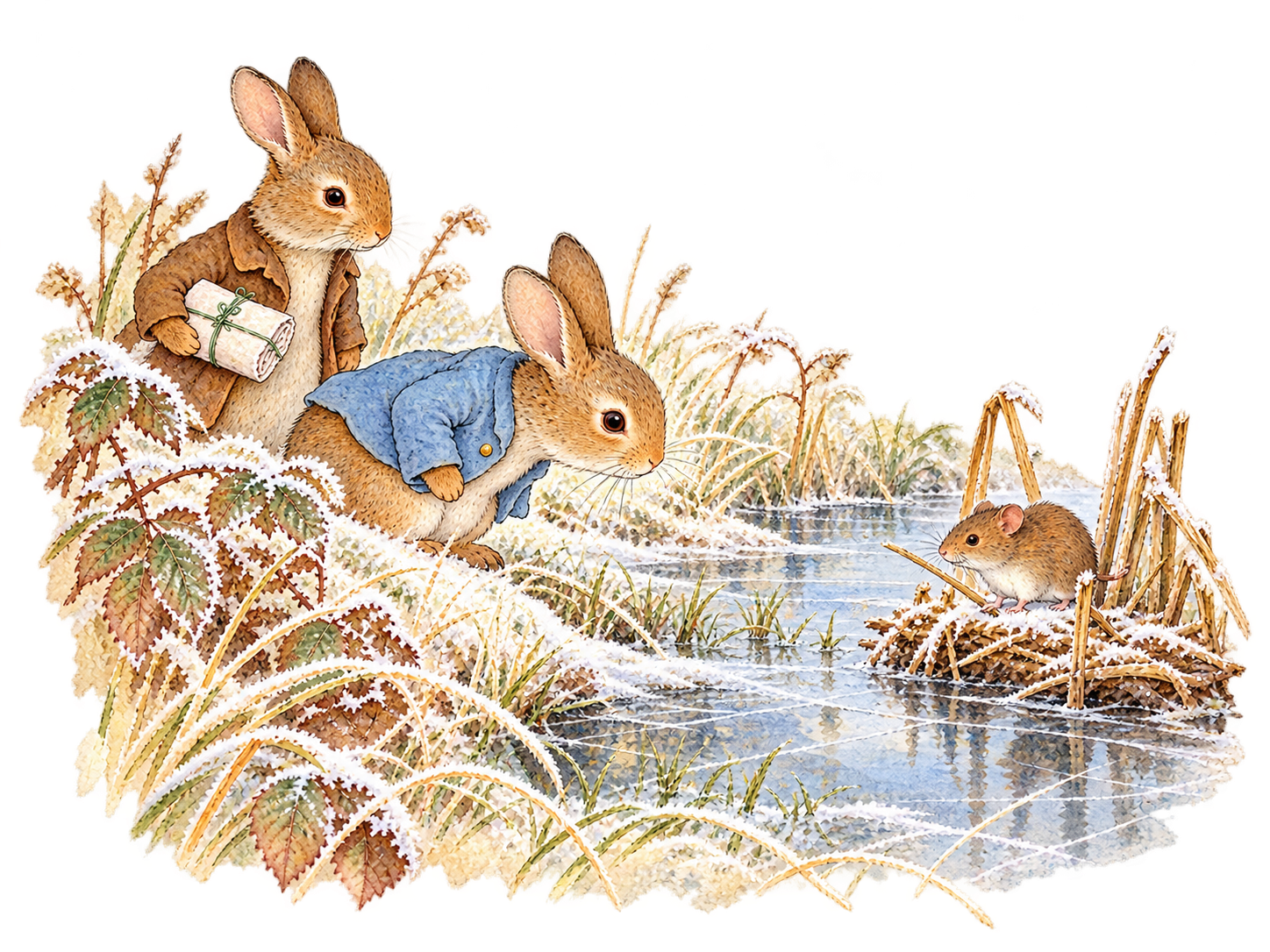
“It is not far,” he said. “It is farther than it looks,” said Benjamin. Peter placed one paw on the ice. It made no sound. He placed another paw beside it. The surface held, and Peter felt pleased with himself.
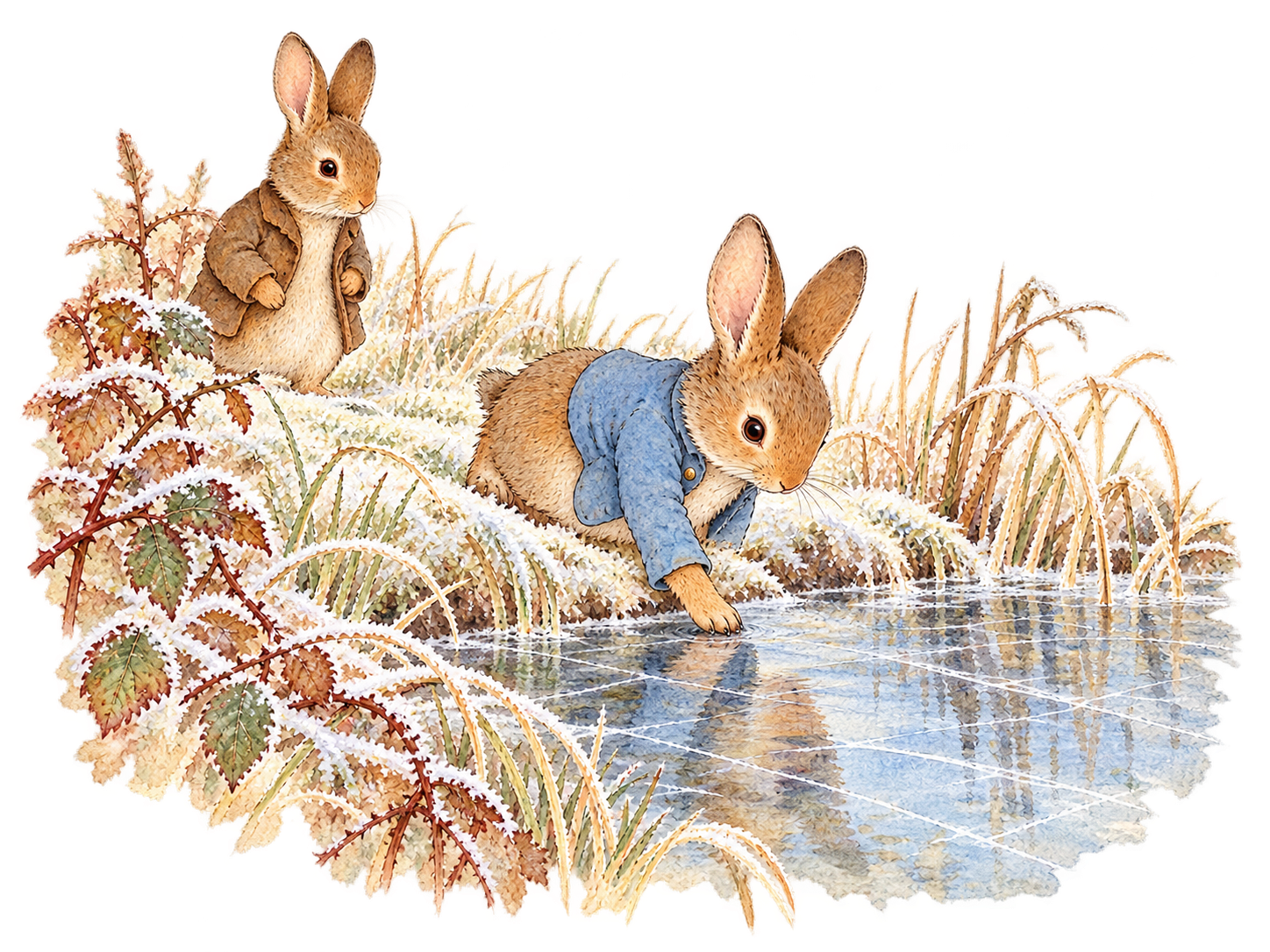
Benjamin set down the parcel. “That will do, Peter.” Peter was only going to take one more step. He meant to reach the raft and lift the mouse to the bank. But when he stepped, a thin crack ran out beneath him, as fine as a hair drawn across glass.
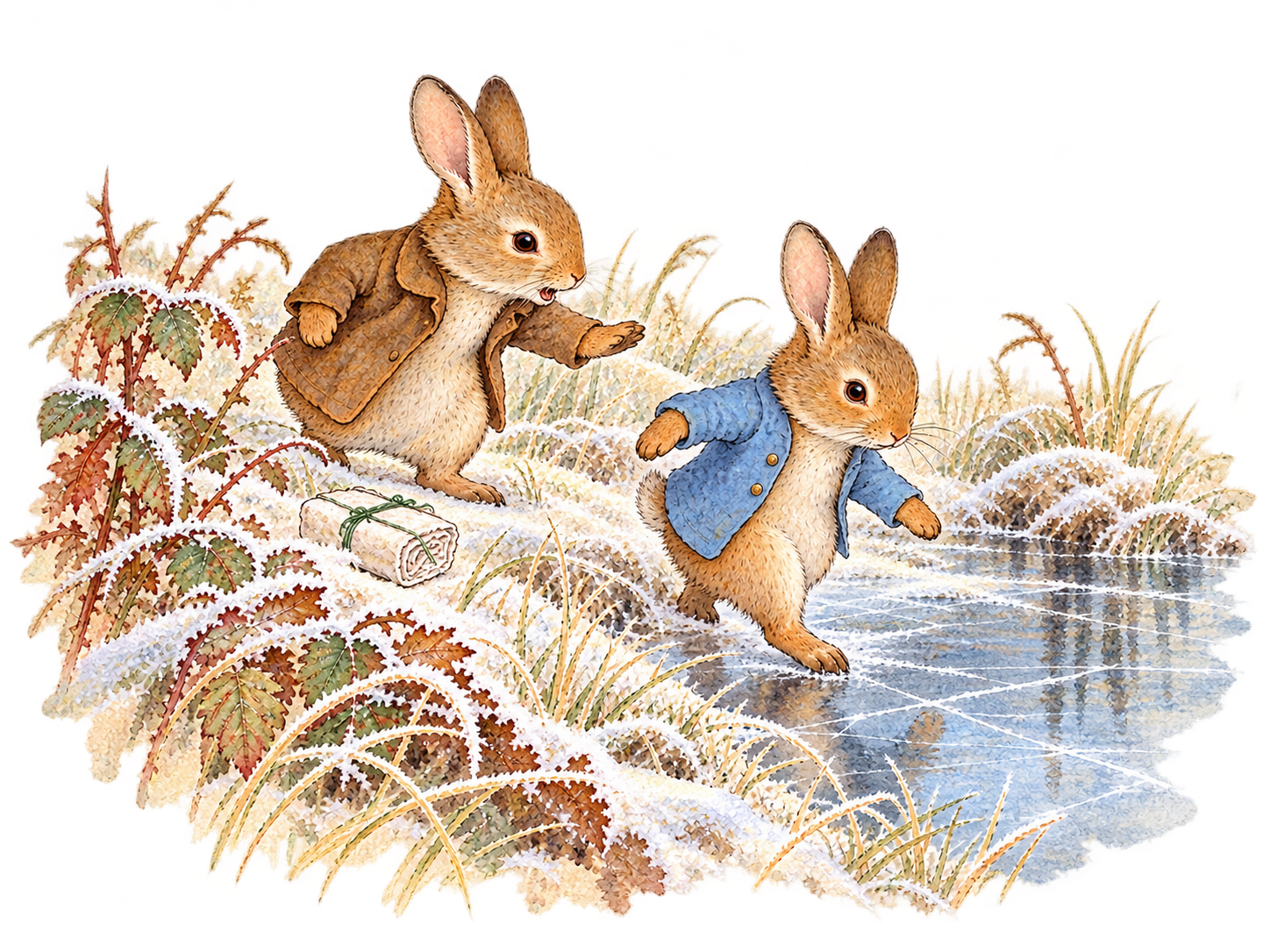
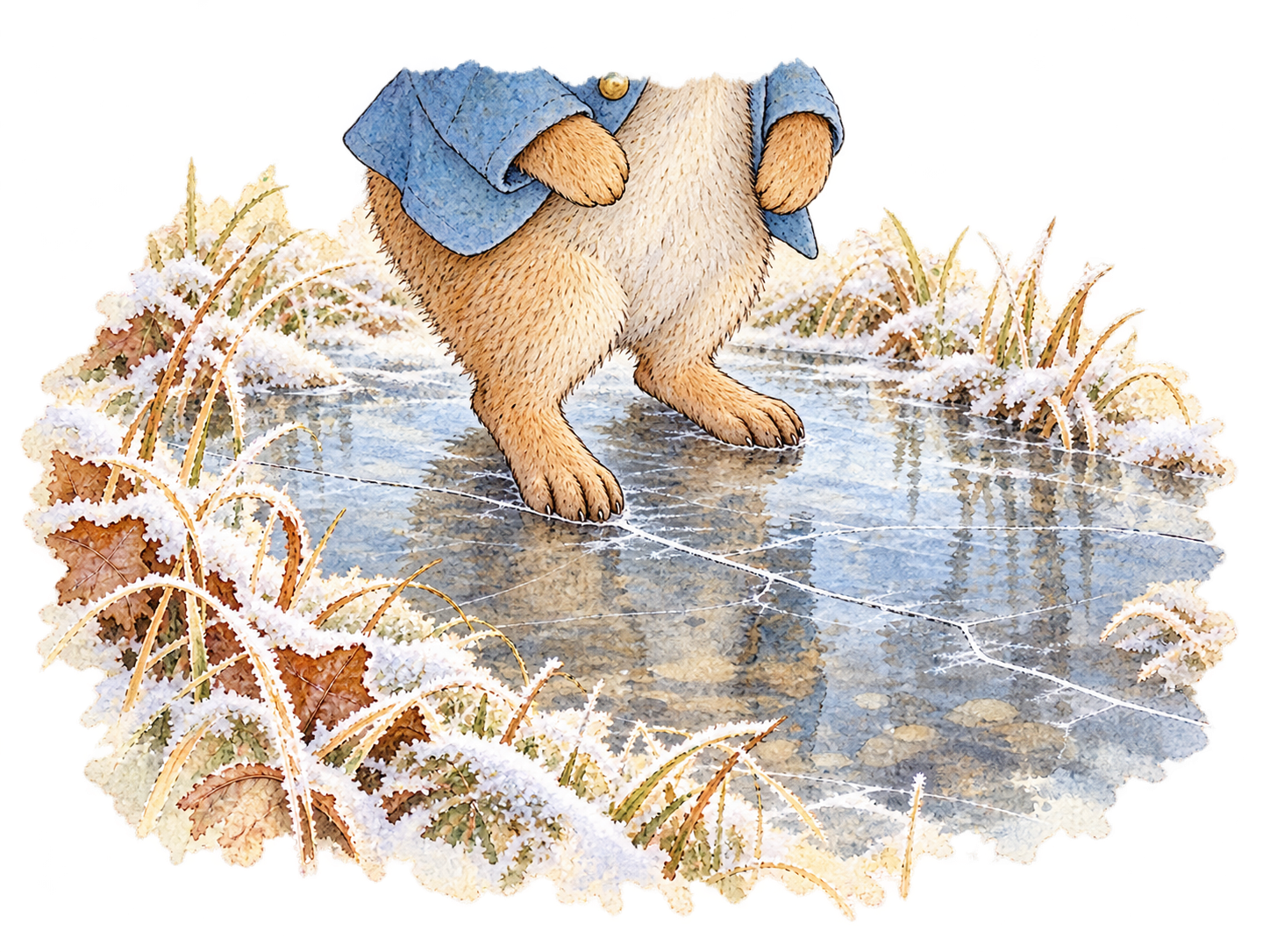
Peter stopped. The ice moved. He turned to go back, and one hind paw went through. Cold water soaked his fur to the ankle. Peter gave a quick jump; several small pieces of ice tipped and slid against one another.
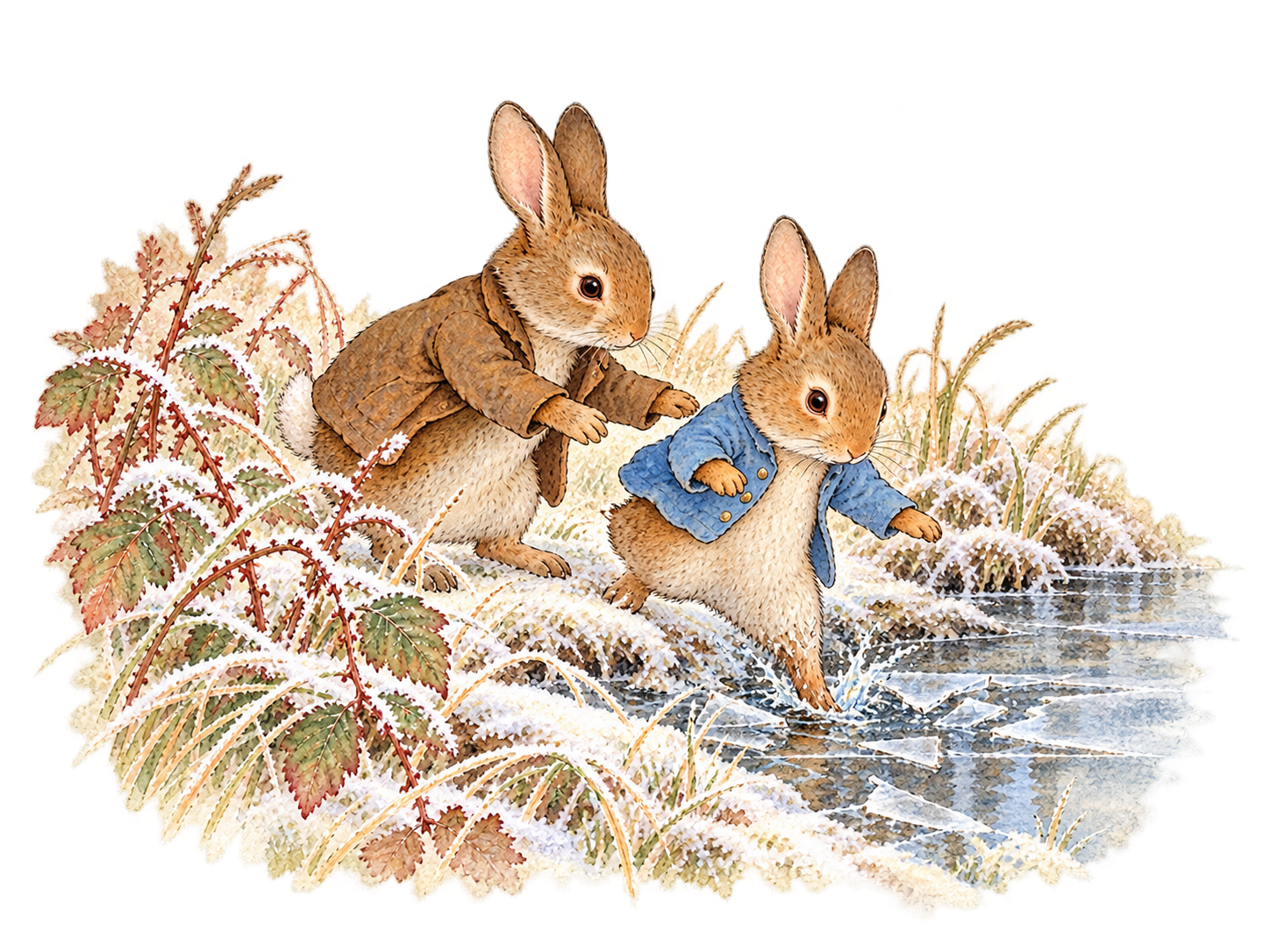
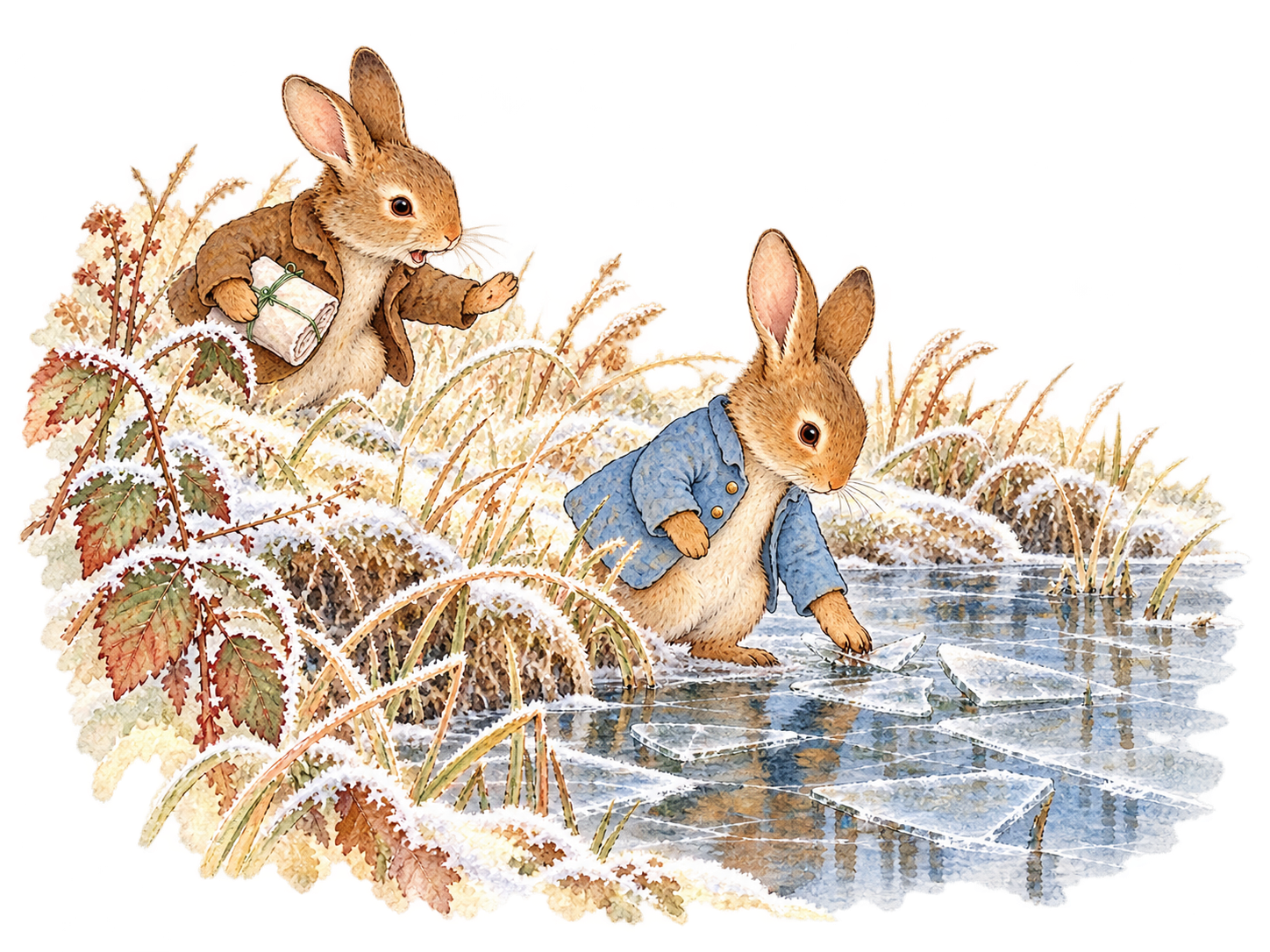
“Do not jump again!” called Benjamin. “Keep still.” Peter stood among the reeds. He was not in deep water, but the ice around his paws had broken into loose, sharp-edged pieces. He could see the brown bank only a few rabbit-lengths away.
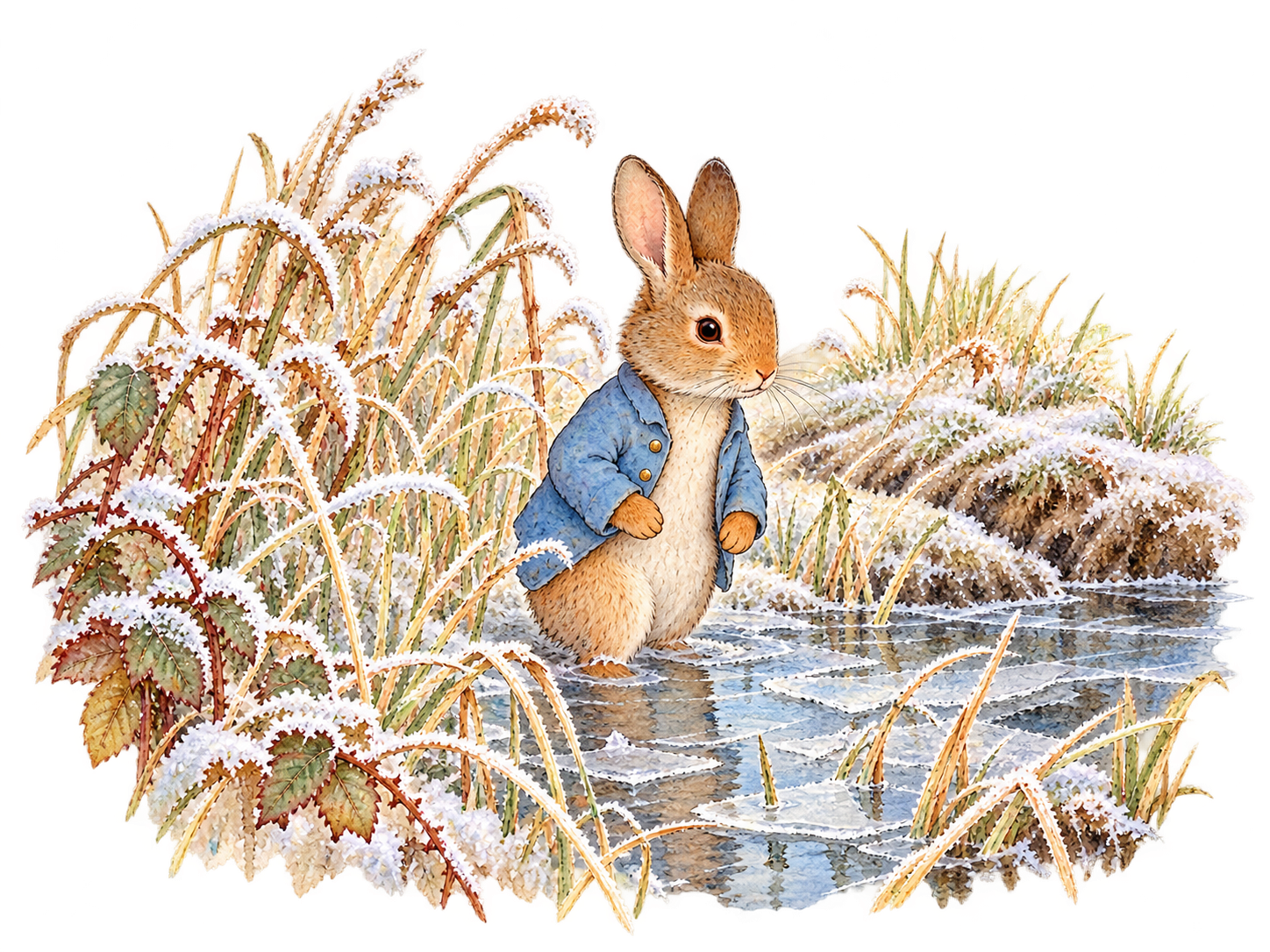
It seemed rather a long way. The mouse scurried to the opposite edge of the tuft. It could not get across the water, and the tuft could not get through the fringe of ice. Benjamin looked first at Peter, then at the water, and then along the bank.
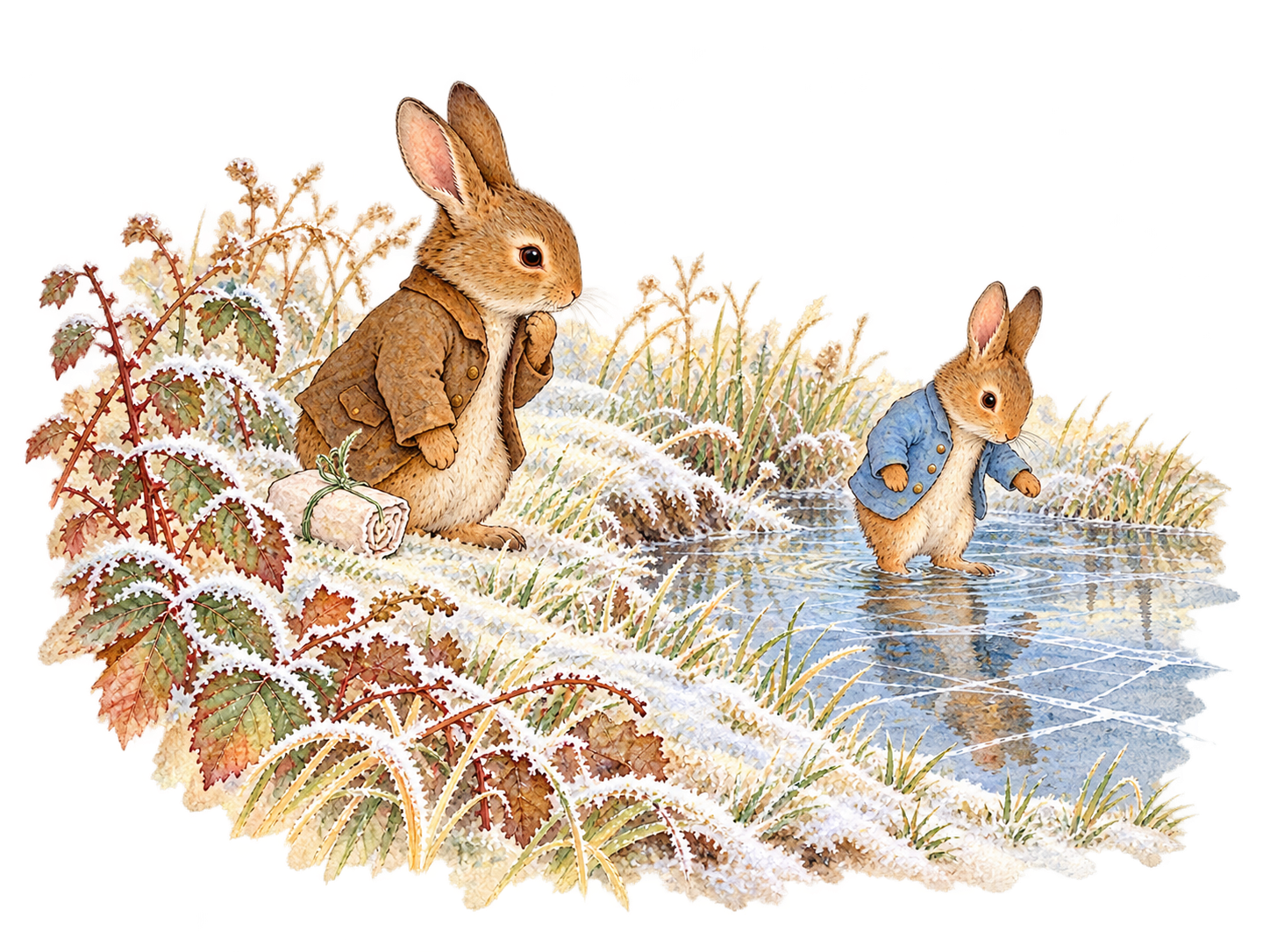
He did not go onto the ice. A long hazel branch lay in the frosty grass, and he brought it back carefully, dragging the narrow end behind him. He tested the branch against the ground. It was firm, and long enough to reach Peter.
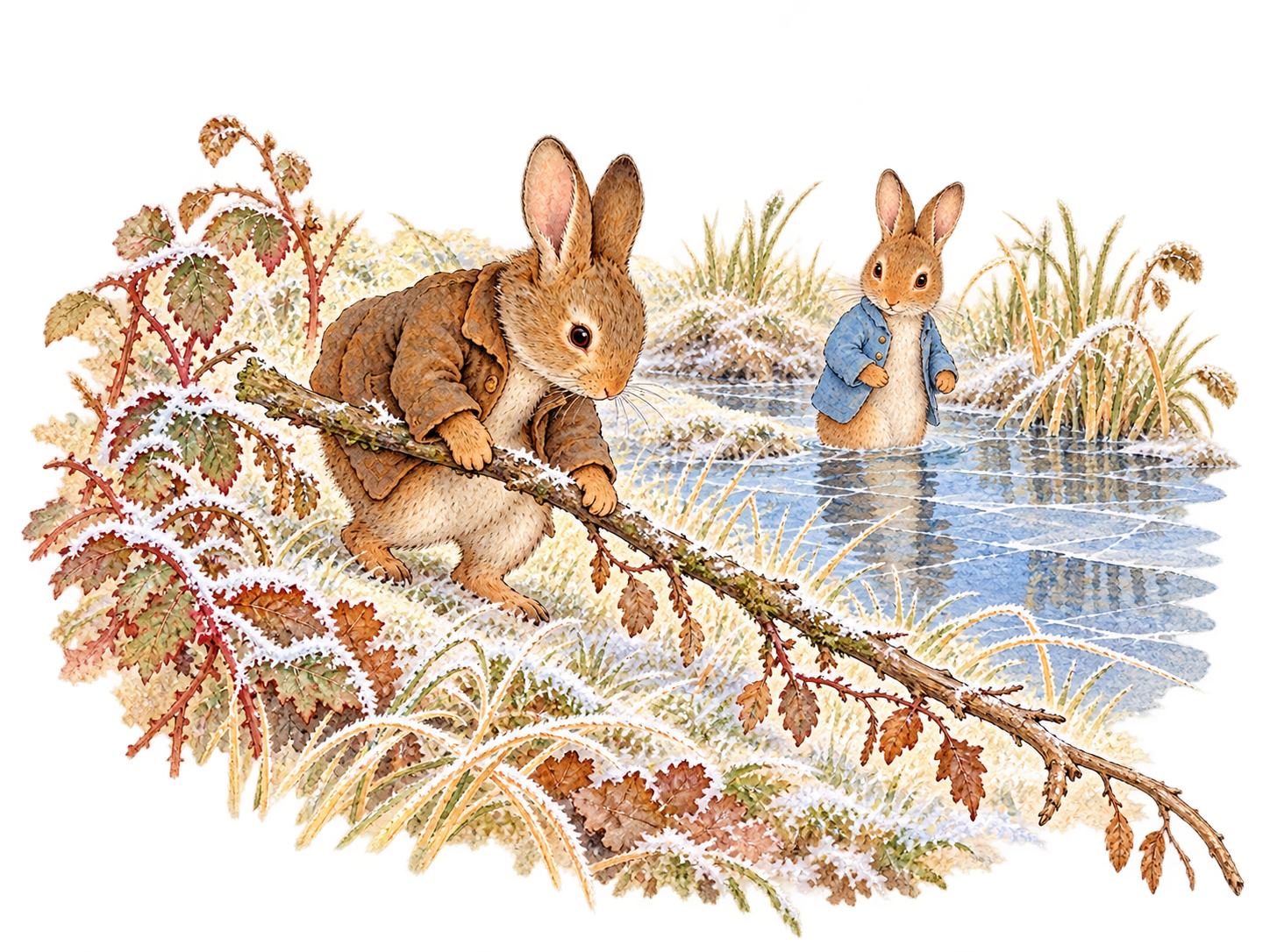
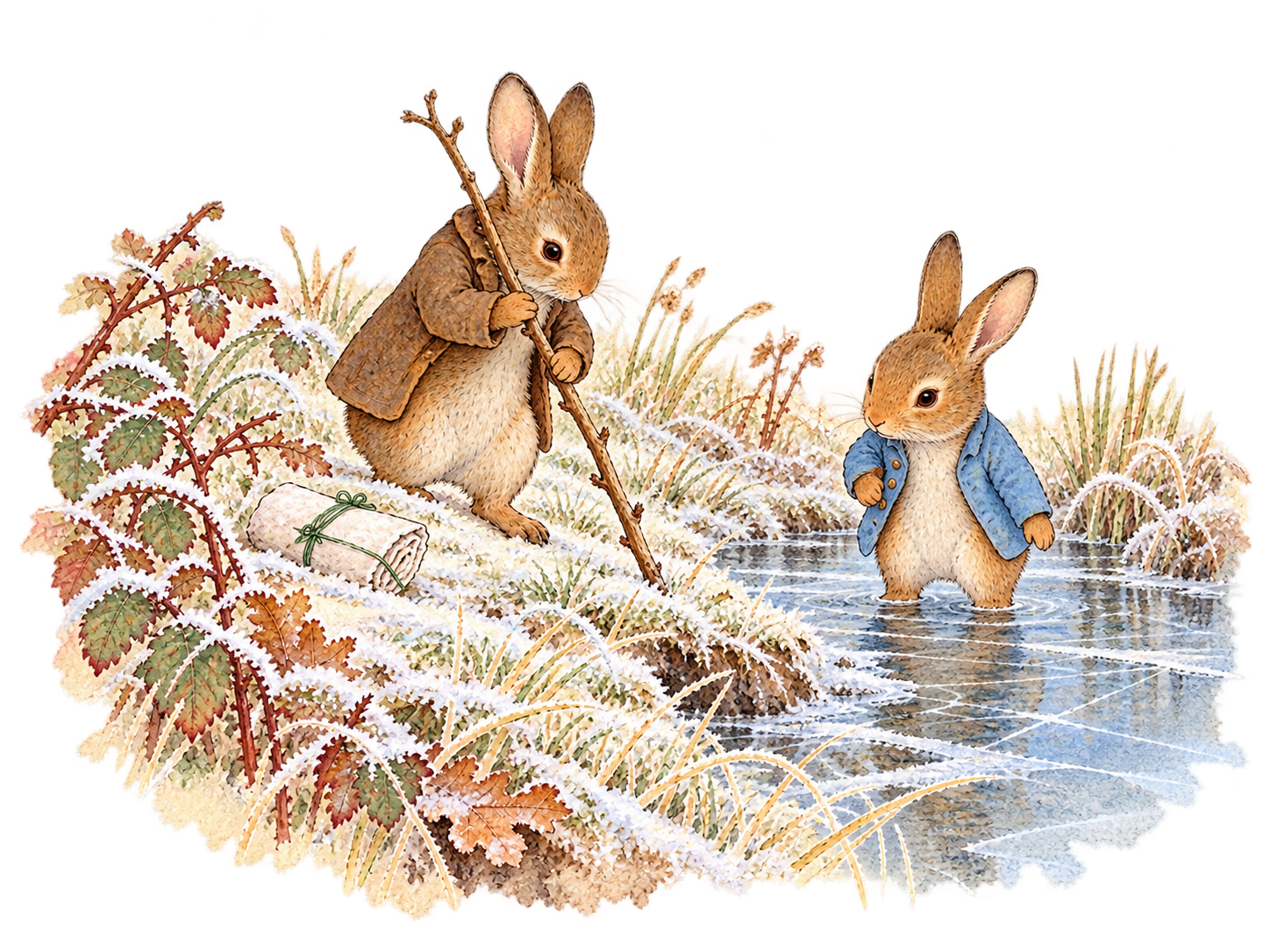
“Can you take hold of this?” he called. Peter stretched out his dry forepaw. Benjamin pushed the branch slowly over the ice until Peter caught the end. The wet paw slipped once, but Peter held on. “Keep low,” said Benjamin.
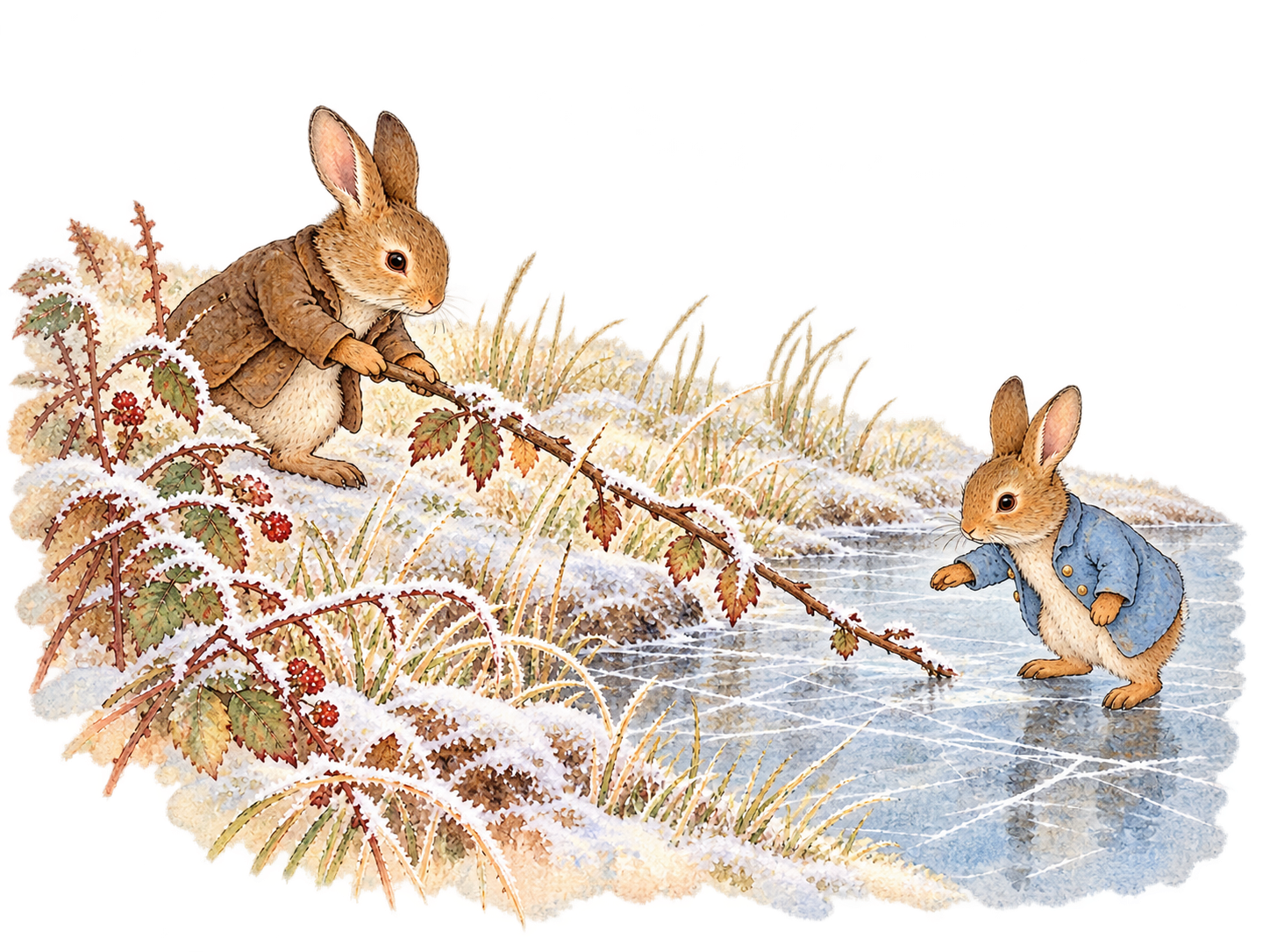
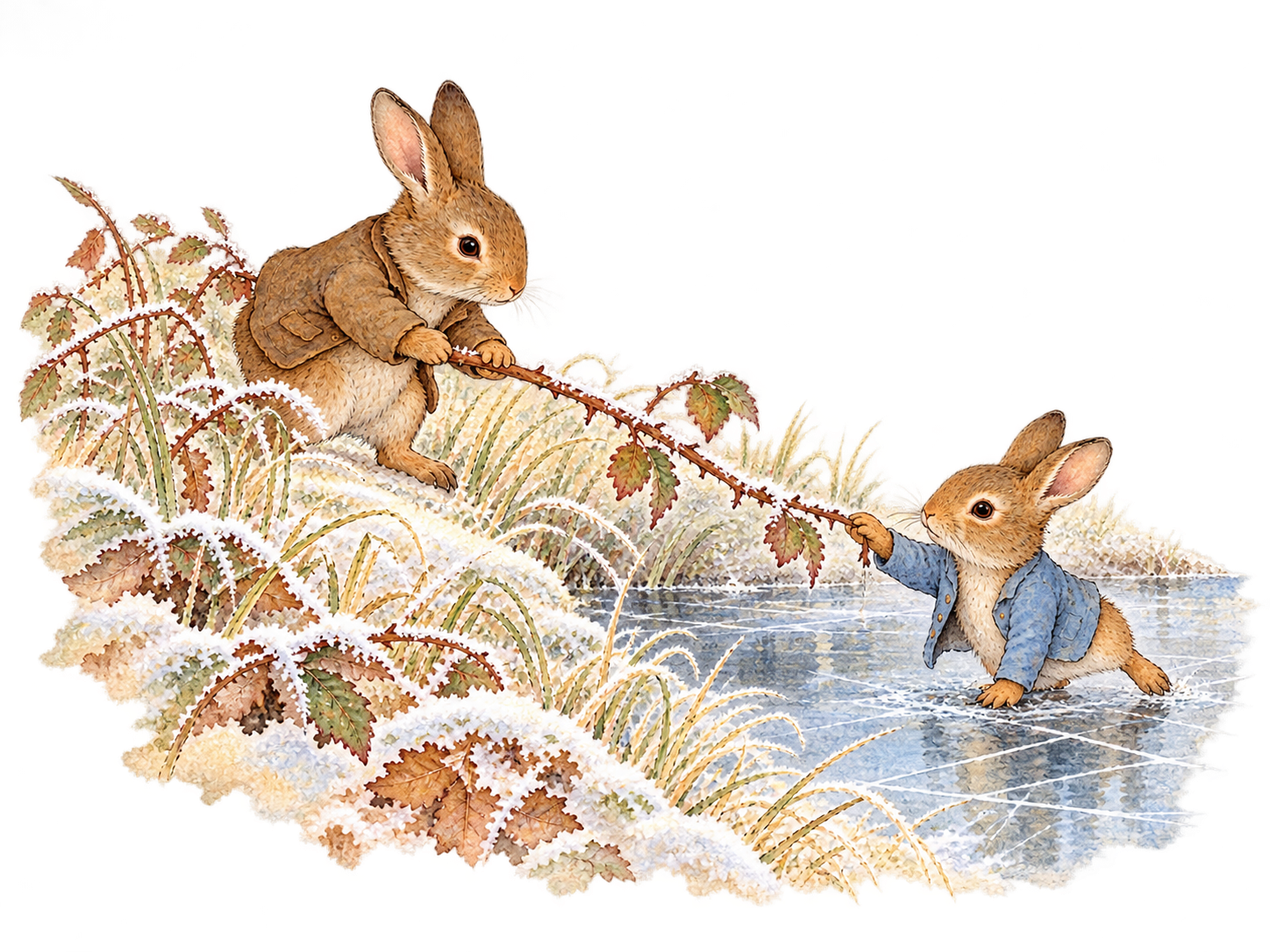
“And do not pull me in.” Peter lowered himself until his coat brushed the ice. Benjamin stayed on the bank and held the branch near its thick end. Peter used the narrow tip to reach the floating tuft.
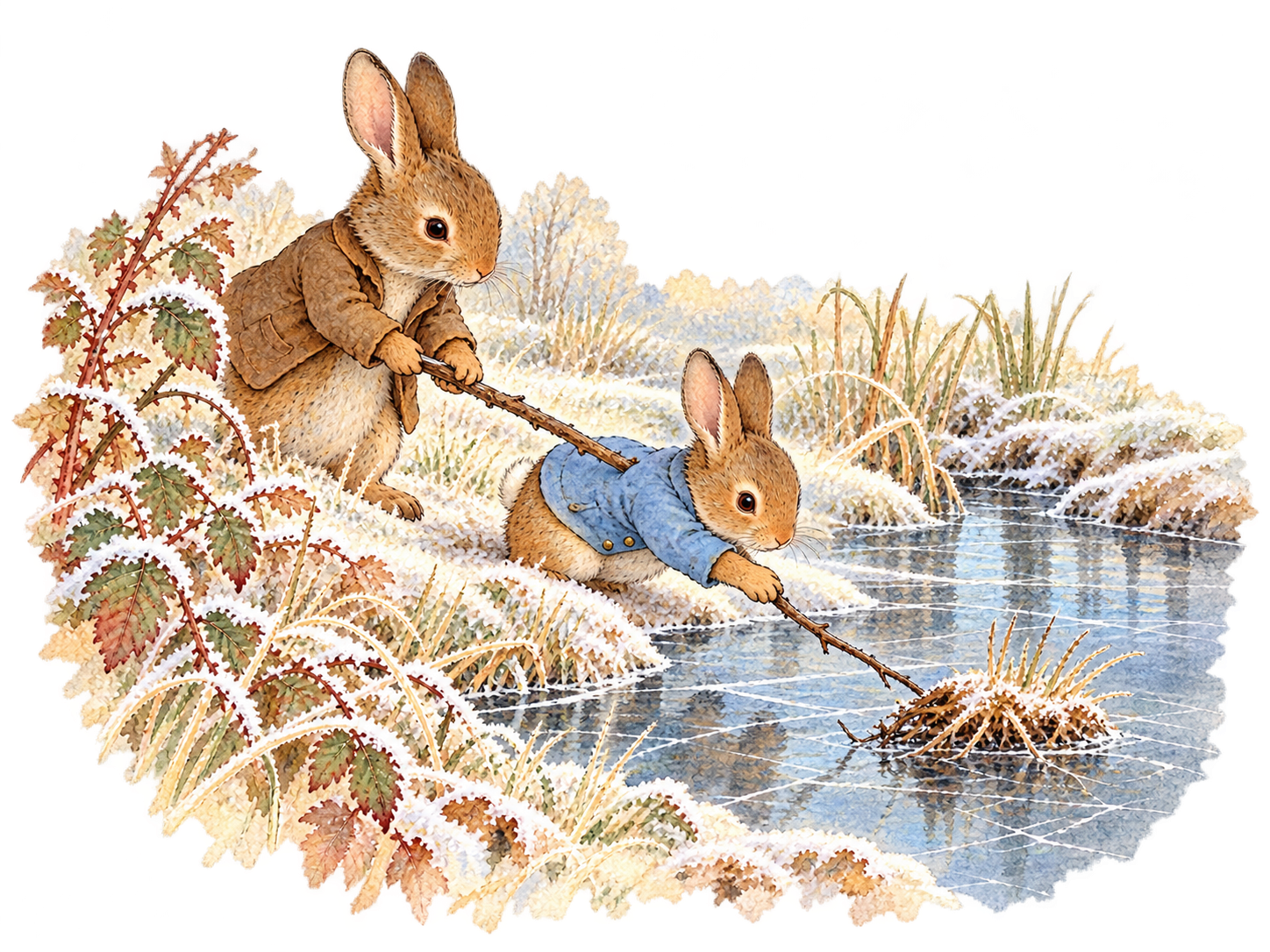
The first time, he touched only a reed. The second time, he pushed too hard, and the tuft swung away from the shore. The mouse darted backward and crouched beneath a leaf. Peter stopped. Benjamin changed his grip on the branch.
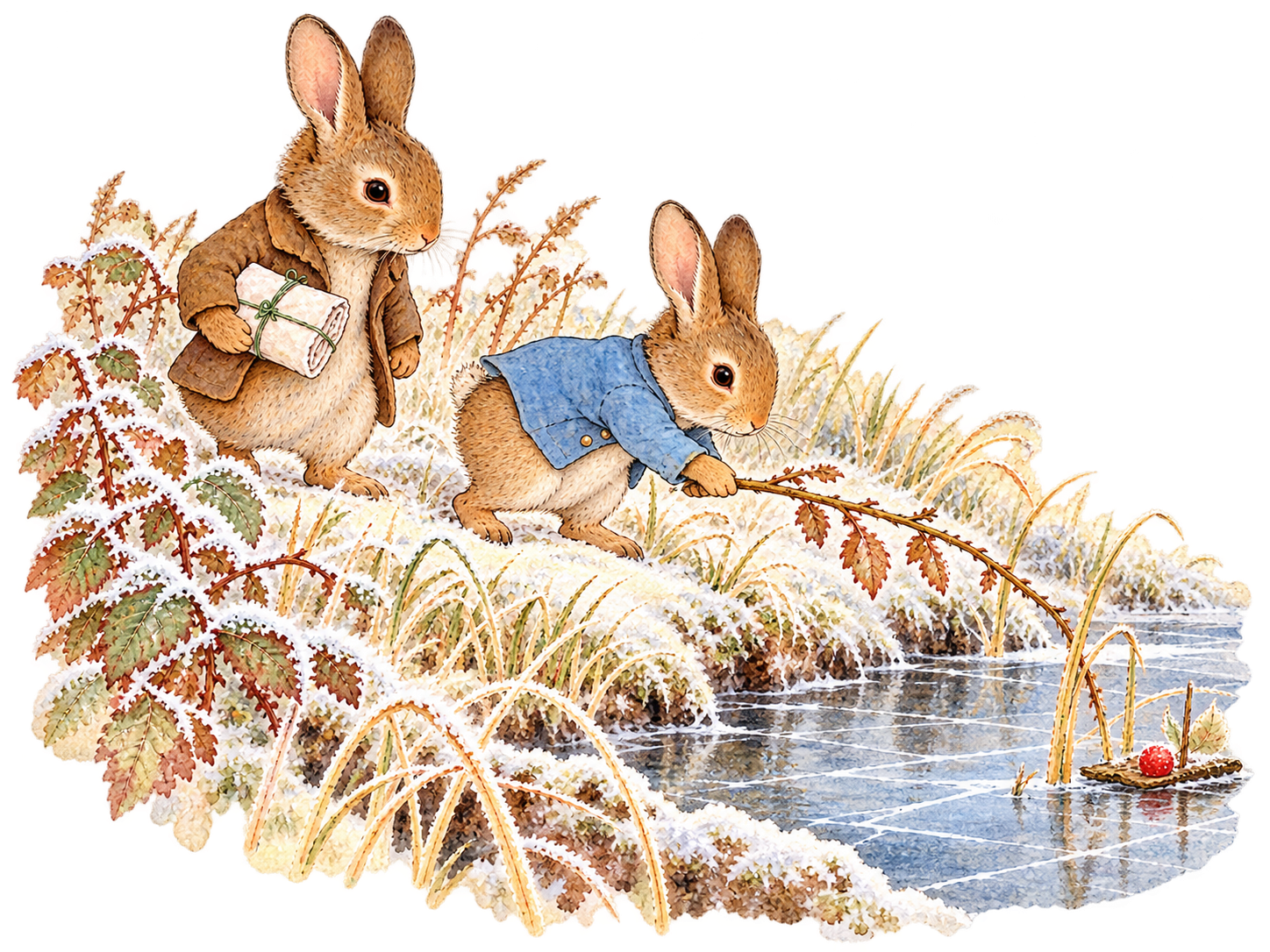
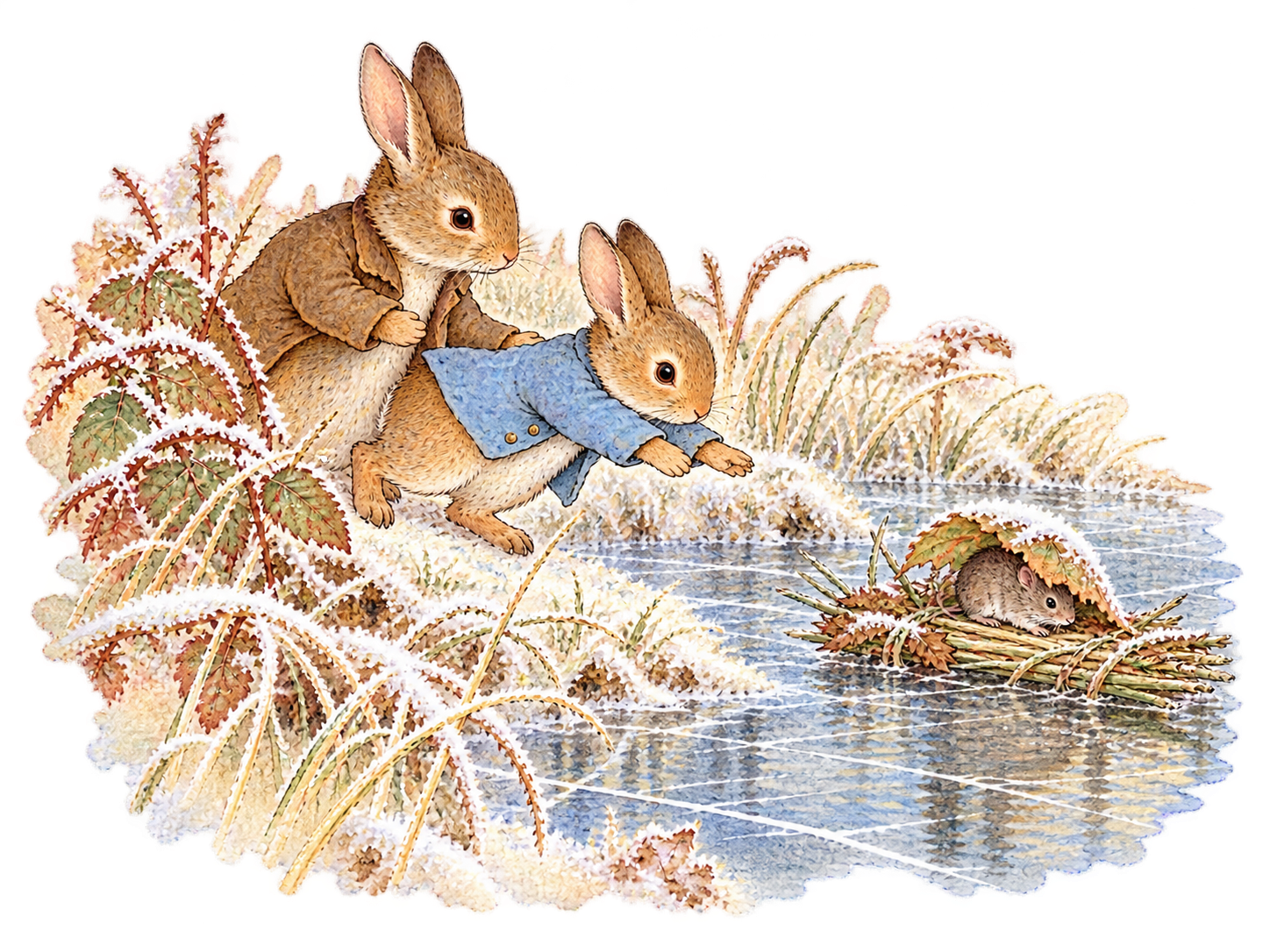
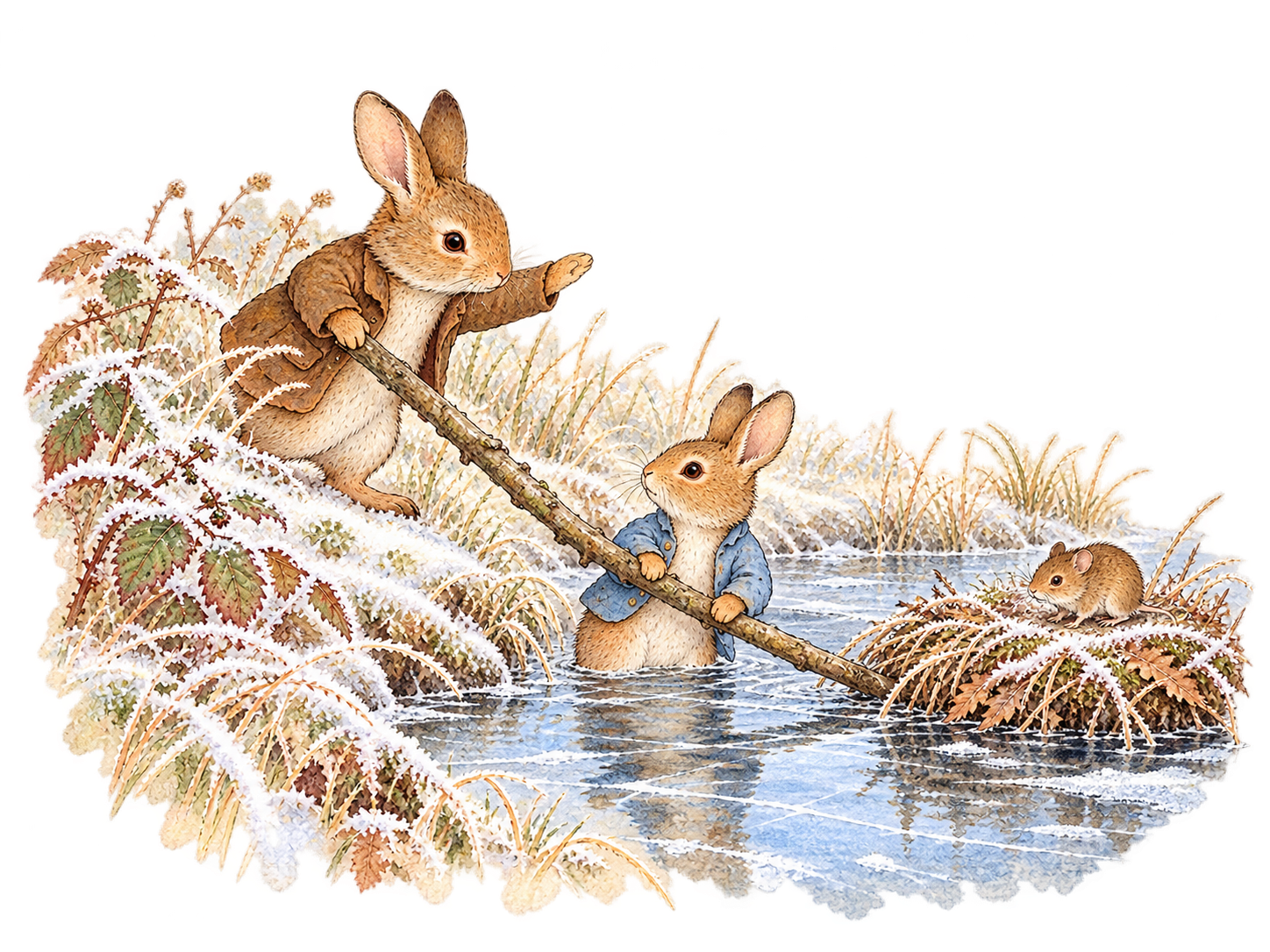
“Under the roots,” he said. “A little at a time.” Peter eased the tip beneath the matted edge. He pushed gently. The tuft turned, then moved a little towards the bank. A reed snapped. The mouse sprang to the other side.
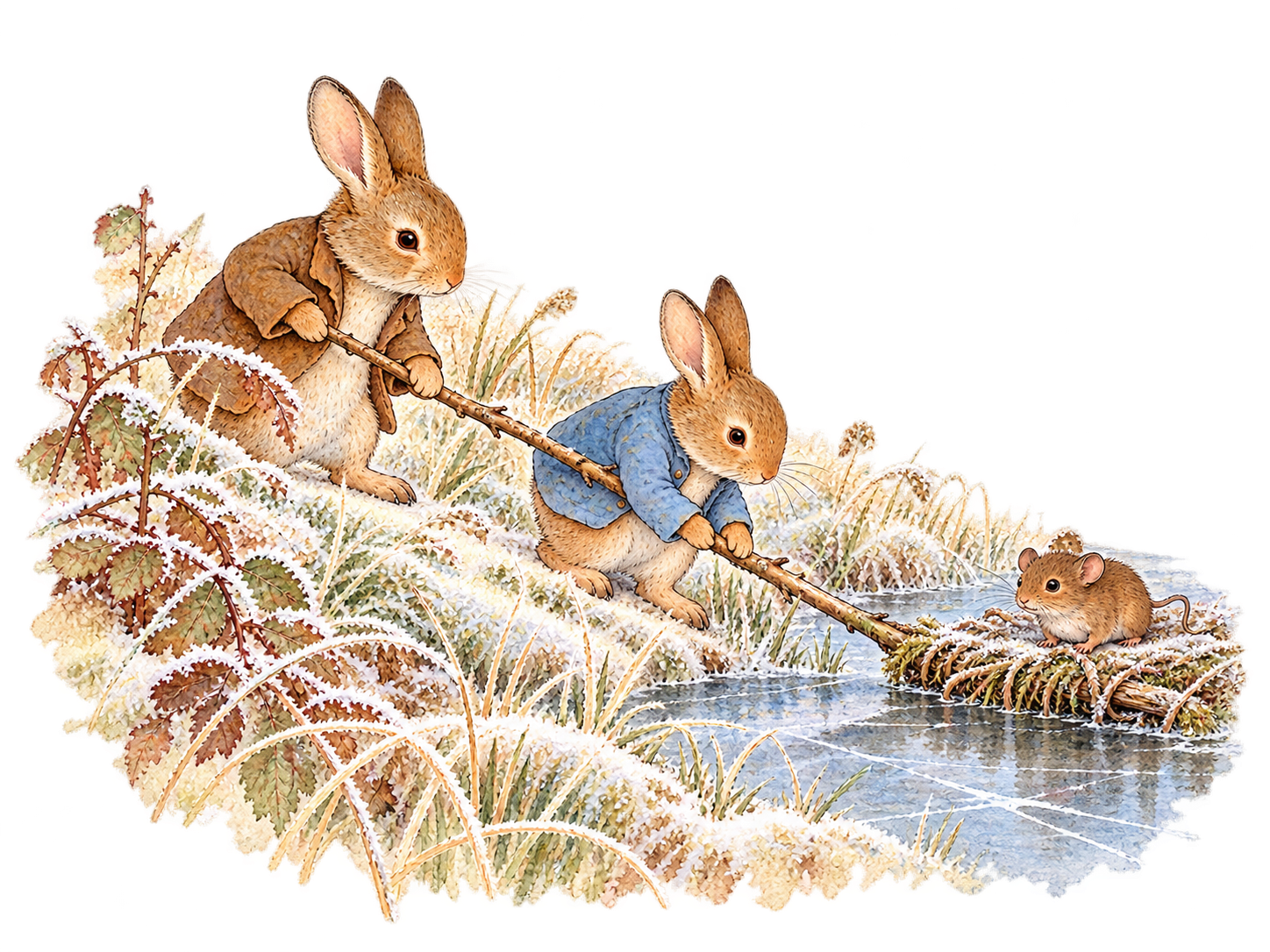
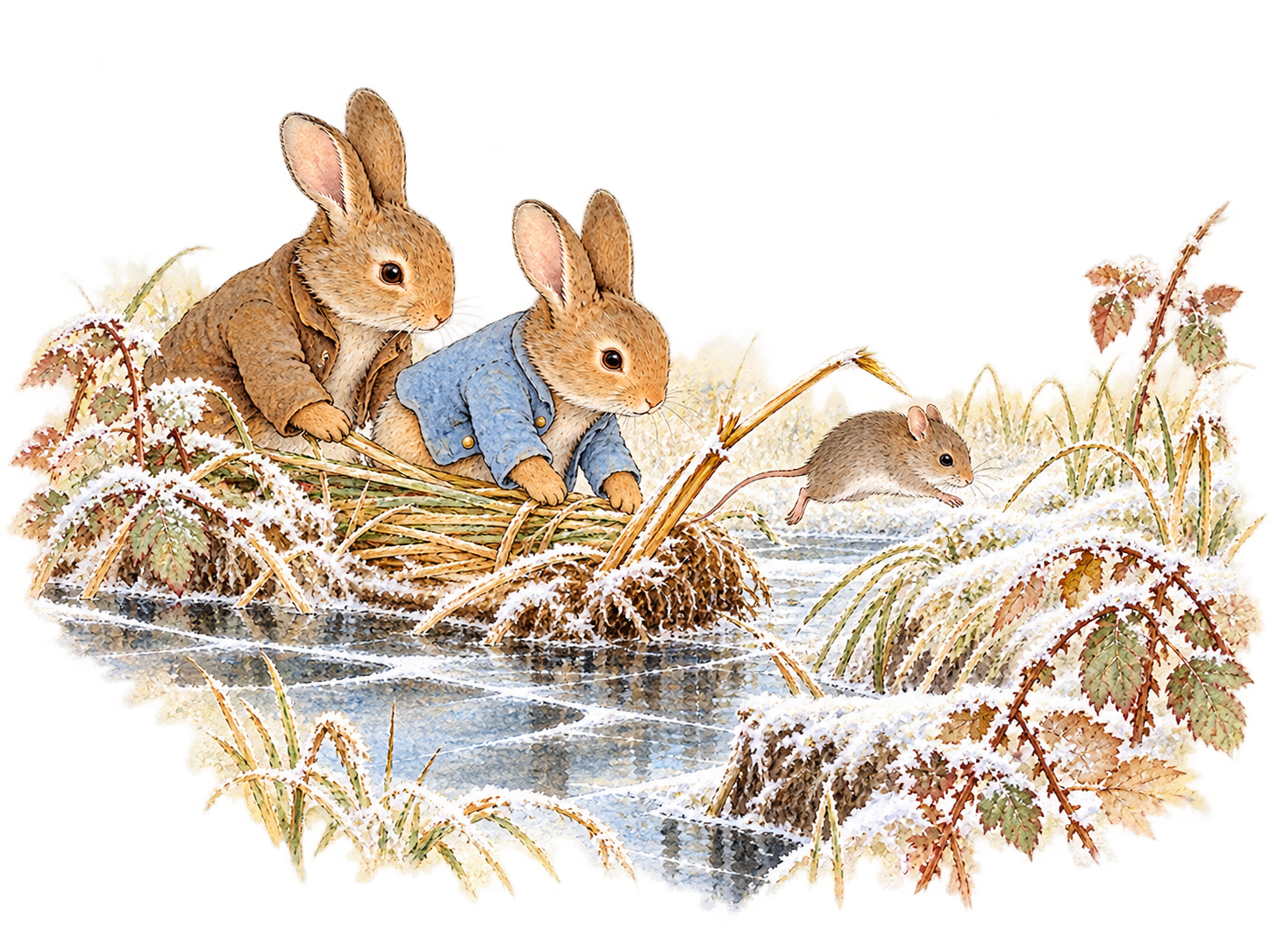
Peter followed it with the branch, careful not to thrust at the small animal. He guided the tuft along the open strip of water until its roots brushed the mud. The mouse jumped onto the bank and vanished into the grass.
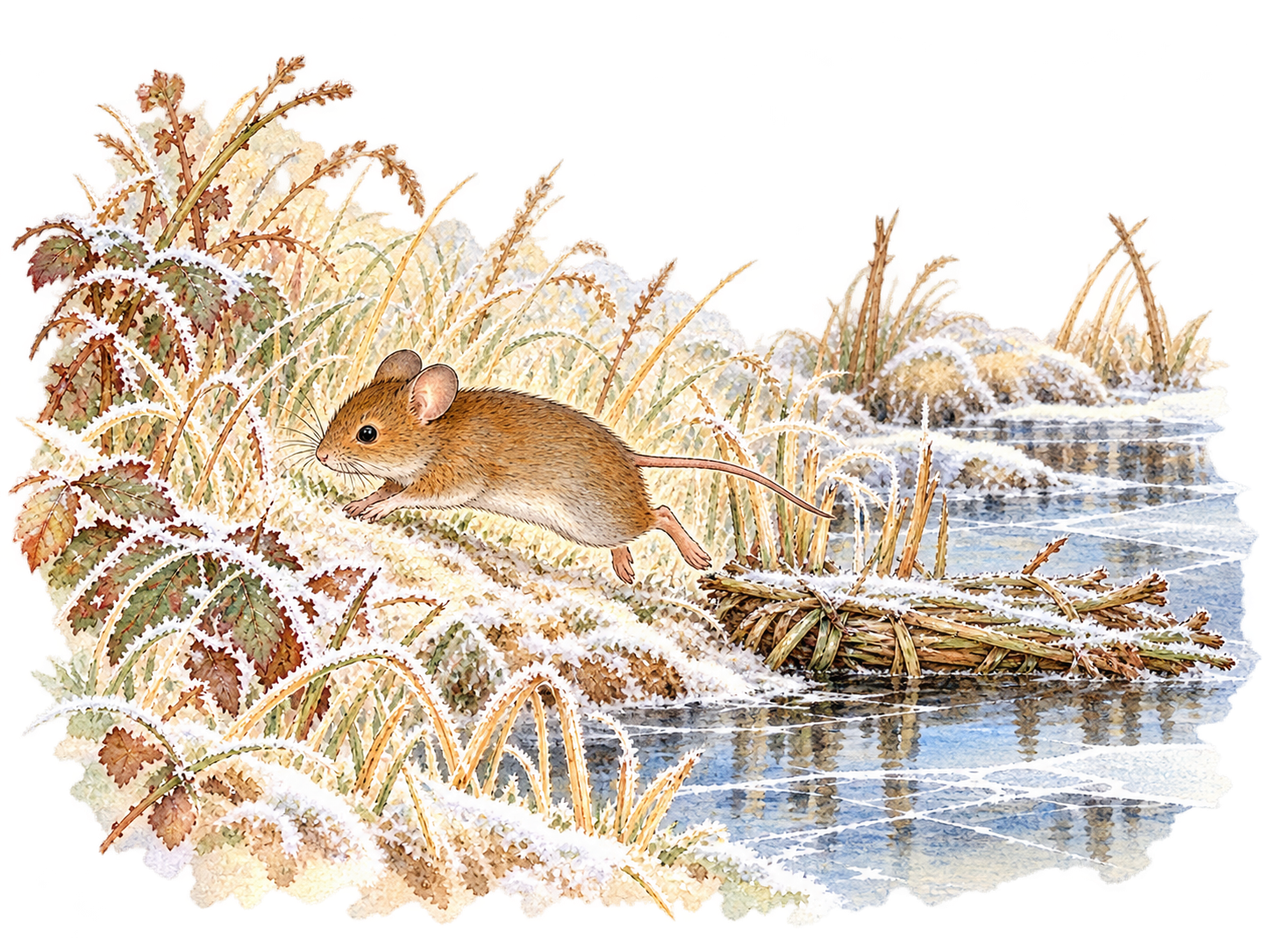
Peter watched the place where it had gone. He had not quite seen it enter the hedge, but he heard a rustle among the roots. “Now come back, slowly,” Benjamin called. Peter began to back through the shallows.
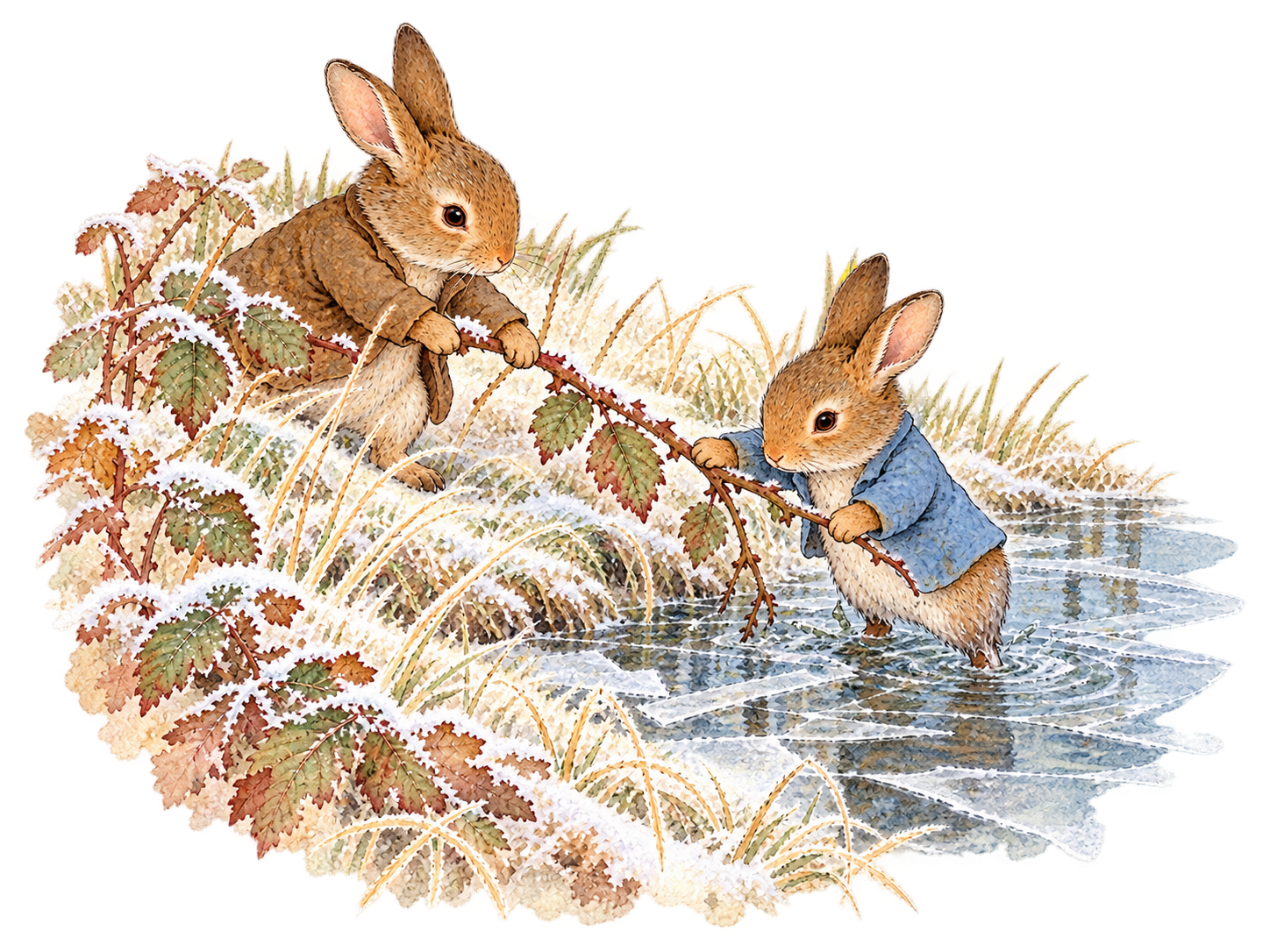
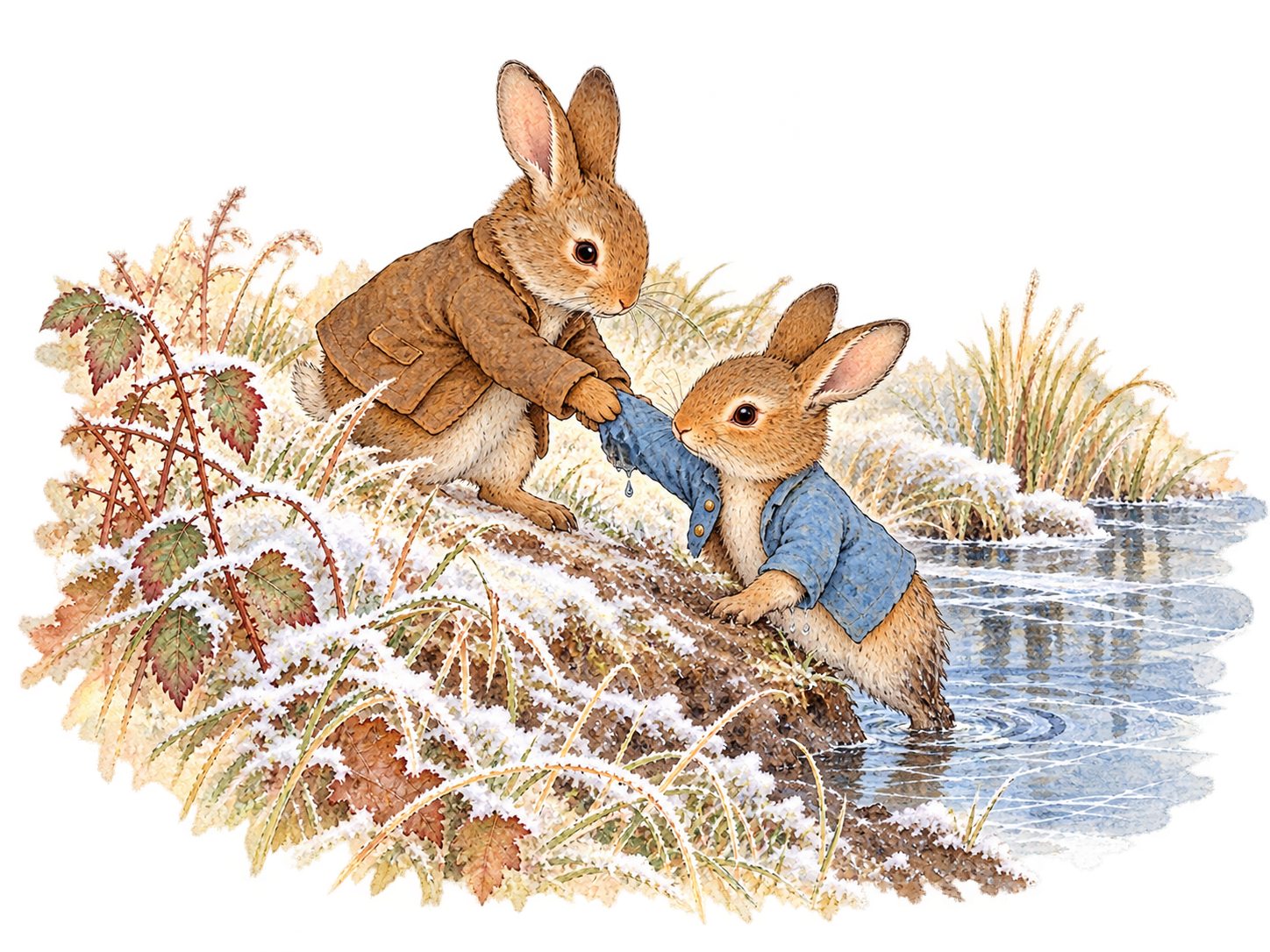
He kept one forepaw on the branch while Benjamin held it firm from the grass. The broken ice clicked against Peter’s wet foot. He wanted to hurry, but the bank was near, and Benjamin’s voice was steady. At last Peter’s forepaws touched the muddy edge.
He climbed onto the grass, and Benjamin caught his sleeve before he slipped backward. Peter’s jacket was damp at one cuff, and his hind paw was very cold. Benjamin shook the water from the end of the branch.
Neither cousin said anything about the thin ice. They picked up the parcel and continued along the path. Peter walked close to Benjamin. The sun had risen above the hedge, and little drops of water fell from the hazel twigs.
Mrs. Tiggy-Winkle opened her door before they knocked. She looked at Peter’s wet paw, then at the muddy corner of the parcel. “Have you been walking upon the pond?” she asked. “No,” said Benjamin. Peter glanced at the shining water behind them.
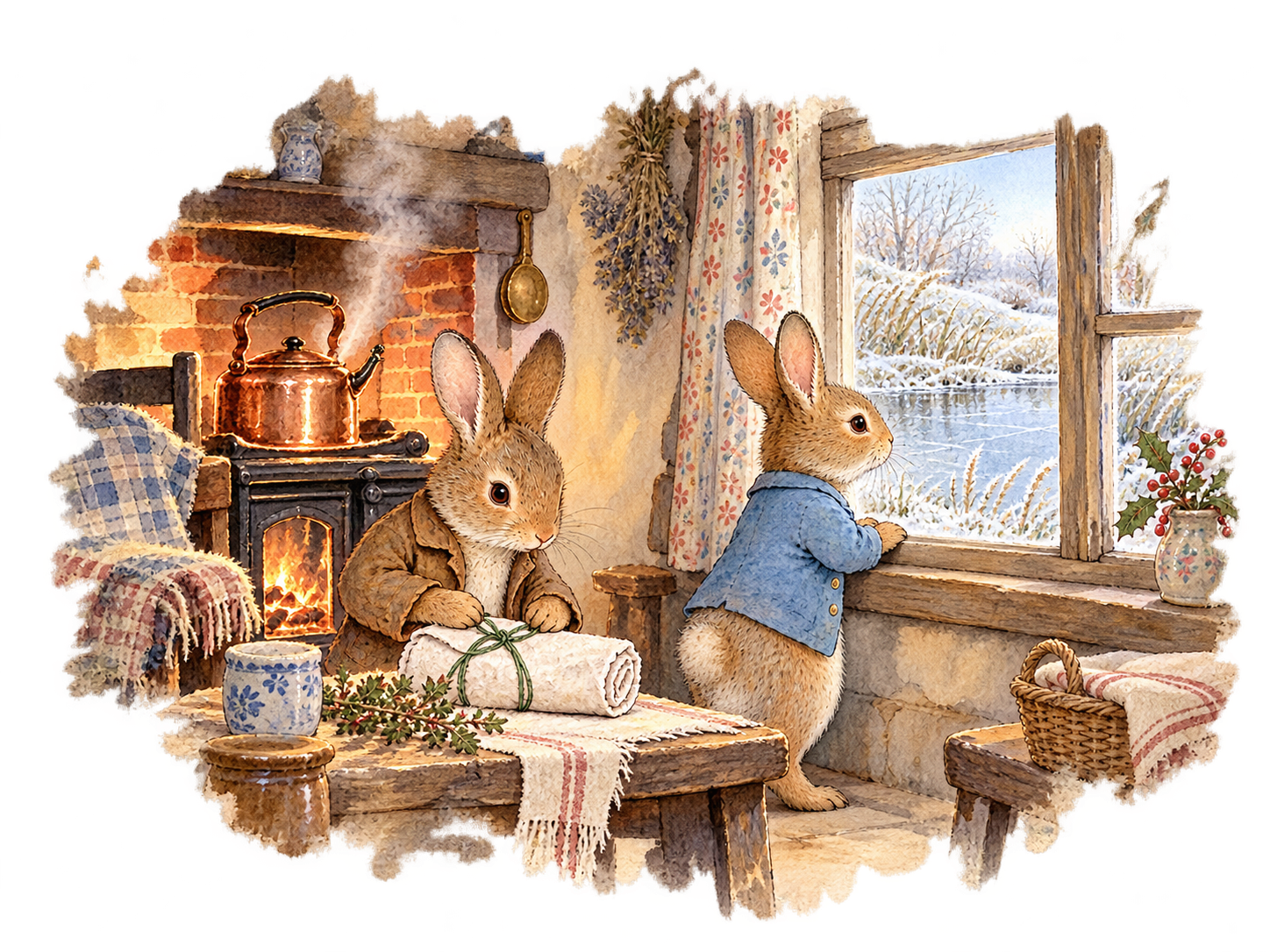
“Not walking, exactly.” Mrs. Tiggy-Winkle did not ask another question. She brought a towel for Peter, set the parcel beside the range, and put a small kettle on the hob. The linen inside was dry. The green thread, however, had come untied.
While Peter held his paw near the warmth, the field mouse appeared beneath the garden hedge. It paused, whiskers moving. Then it slipped between two roots and was gone. Benjamin helped Mrs. Tiggy-Winkle retie the parcel. Peter watched him make the knot.
The pond outside was still and silver. Peter looked at it from the window, where the floor was dry and the kettle was beginning to sing.
Outro
That is the end of this adventure. Which familiar countryside neighbor would you like to meet in the next tale?
P.S.
Beatrix Potter spent hours exploring and sketching wildlife. Her close observation of animals and landscapes helped give her imagined stories their vivid sense of the natural world.
For readers who would like to explore Beatrix Potter’s original tales, Project Gutenberg offers The Tale of Peter Rabbit, The Tale of Benjamin Bunny, and The Tale of Mrs. Tiggy-Winkle, along with a collection of her stories and a catalog of her books: