
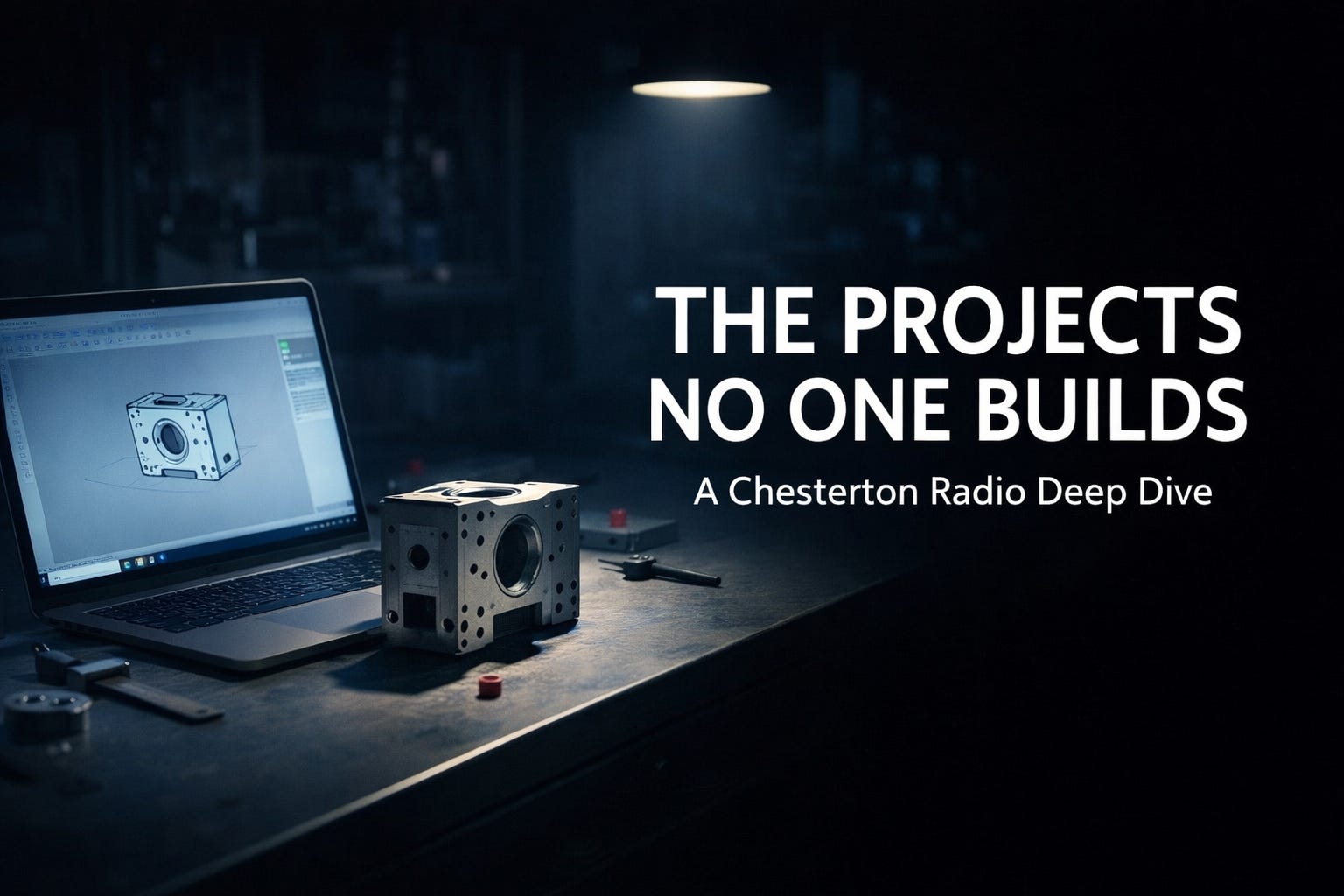
Every engineering organization has them.
Ideas that are good—sometimes very good—but never quite make it onto the roadmap.
Not because they lack value.
But because they lack time.
In this episode, we explore a largely overlooked pathway for turning those “someday” ideas into real, working hardware: university engineering capstone programs.
Focusing on the Mechanical Engineering senior design program at Benedictine College, we unpack how these projects actually work—and why their defining constraint (they must be non-critical to operations) is precisely what makes them so effective.
We discuss:
Why engineering teams accumulate “unbuilt” ideas
What makes a project a strong (or weak) fit
The surprisingly high ROI of prototype-first thinking
How test rigs, thermal systems, and internal tools often make the best candidates
Why this model de-risks innovation in a way most companies overlook
This isn’t a pitch. It’s a perspective.
Because somewhere inside your organization, there are likely a few ideas that don’t need a budget increase or a strategy shift—
They just need a place to be built.
🔗 Learn More
If you’re curious about the program discussed in this episode:
Senior Design Overview:
https://www.benedictine.edu/academics/departments/engineering/senior-designProposal Submission Details:
https://www.benedictine.edu/academics/departments/engineering/senior-design/proposals
🎧 About Chesterton Radio
Chesterton Radio is listener-supported.
If you value thoughtful, in-depth explorations like this—and want to see more content at the intersection of engineering, craft, and culture—you can support the work here:
👉