

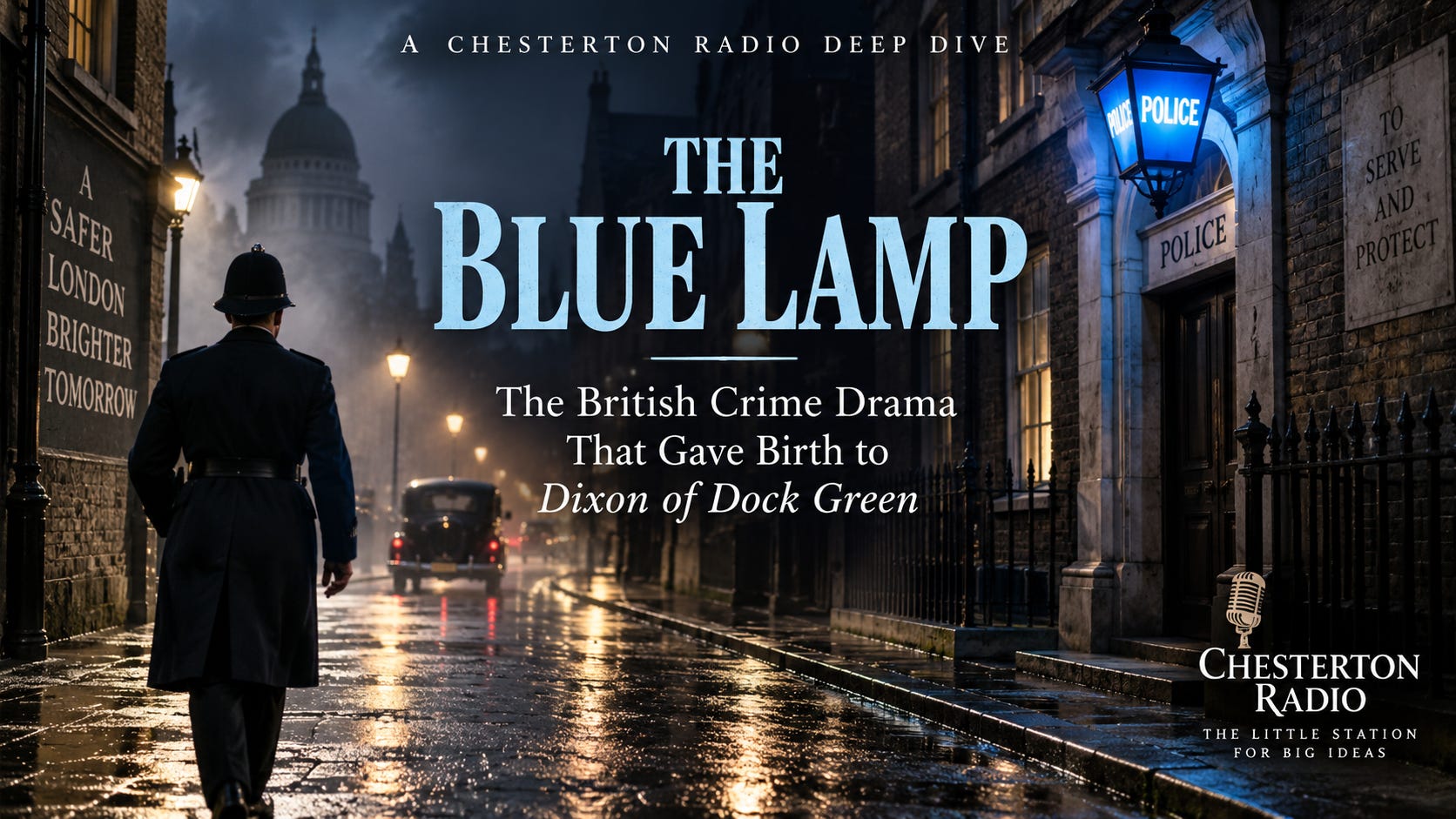
Before British television had Dixon of Dock Green, there was The Blue Lamp.
Released by Ealing Studios in 1950, The Blue Lamp took audiences into the streets of postwar London and introduced an unassuming policeman named PC George Dixon. What began as a gritty crime drama would unexpectedly help create one of the most enduring characters in British broadcasting.
In this Chesterton Radio Deep Dive, we return to the world of The Blue Lamp—its origins, its portrait of postwar policing, director Basil Dearden and Ealing Studios, and the remarkable afterlife of George Dixon.
We also explore something less remembered today: The Blue Lamp returned to radio.
BBC adaptations in 1965 and 1984 transformed a story famous for its London streets and visual realism into something built almost entirely from voices, sound and imagination.
Why did this particular story endure? What happens when a distinctly cinematic crime drama becomes radio? And how did one policeman from a 1950 film become a fixture of British popular culture for more than two decades?
This episode contains no major spoilers, so you can discover the story for yourself afterward.
🎧 Hear the Complete Radio Play
After the Deep Dive, listen to The Blue Lamp — the 1984 BBC radio adaptation on Internet Archive:
https://archive.org/details/the-blue-lamp-1984-radio-version-by-ted-willis
The historical recording is hosted externally by Internet Archive; Chesterton Radio is not rebroadcasting it.
Discover more original stories, Deep Dives, radio discoveries and the Chesterton Radio live stream at:
Chesterton Radio is independent and listener-supported. If you enjoy these Deep Dives and original programs, please consider becoming a paid subscriber or supporting the station.
Your support keeps the Little Station broadcasting.


