

We’ve heard this before.
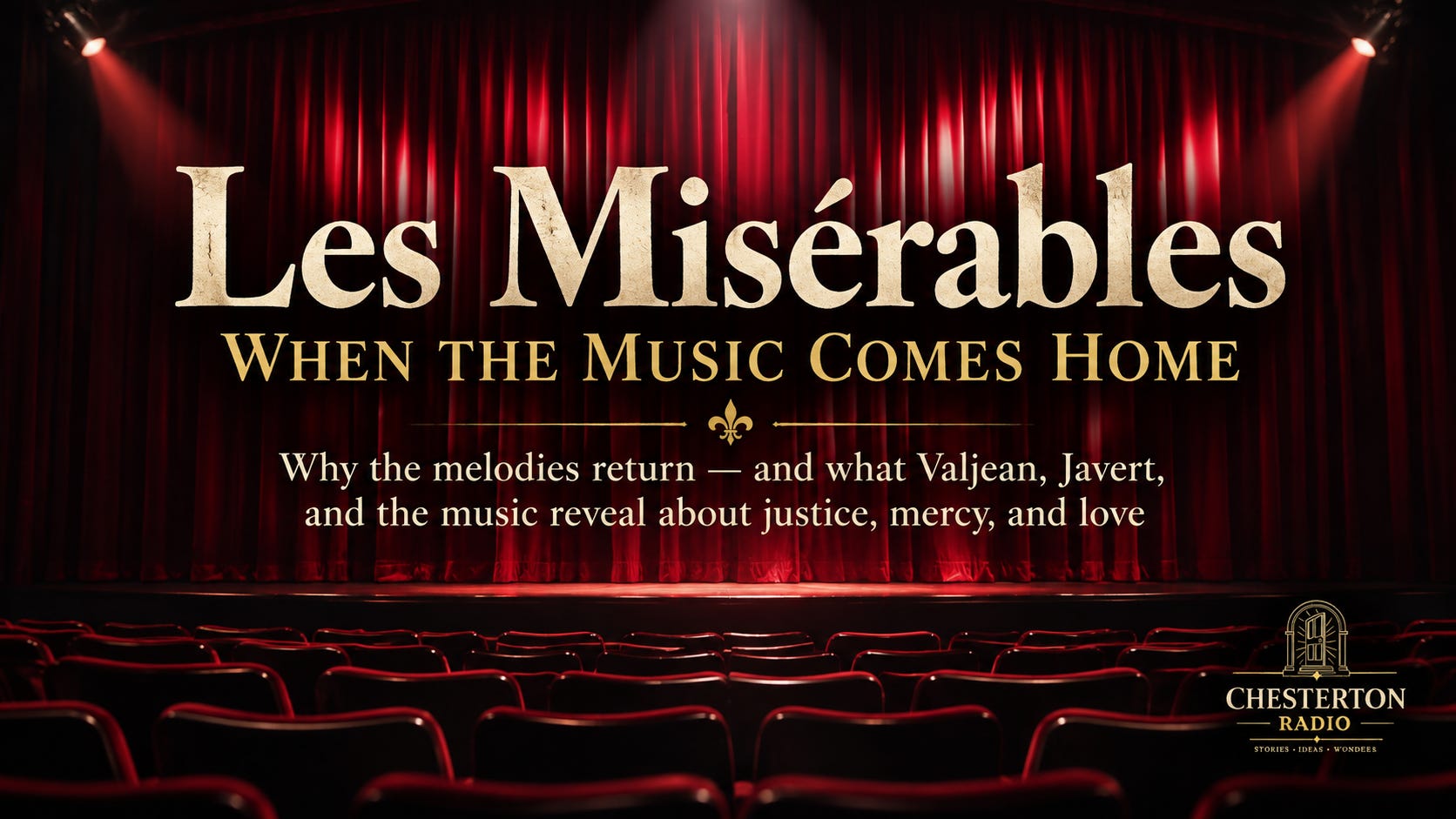
Near the end of Les Misérables, Javert confronts an act of mercy that shatters everything he believes about justice—and suddenly the music takes us somewhere strangely familiar.
That musical echo is no accident.
In this follow-up to “Les Misérables: From Orson Welles to Broadway,” we listen more closely to Claude-Michel Schönberg’s remarkable score: the recurring melodies that connect Valjean and Javert, the different forms of love expressed by Fantine, Éponine, Marius and Cosette, the extraordinary convergence of One Day More, and the music that returns as Valjean’s journey reaches its end.
At the center are two men confronted by mercy. One allows it to make him a new man. The other discovers that his entire understanding of the world cannot contain it.
Why does Les Misérables remain so powerful when millions of us already know how the story ends?
Perhaps because the melodies return for the same reason we return to the story.
The questions return.
Justice and mercy. Guilt and redemption. Sacrifice and suffering. Hope and love.
The barricades belong to another century.
The questions do not.
A Chesterton Radio Original.
Spoiler warning: This program discusses major events throughout Les Misérables, including its ending.
Support independent radio: If you enjoy thoughtful programs like this, consider becoming a paid subscriber and helping Chesterton Radio continue creating original programming.


