

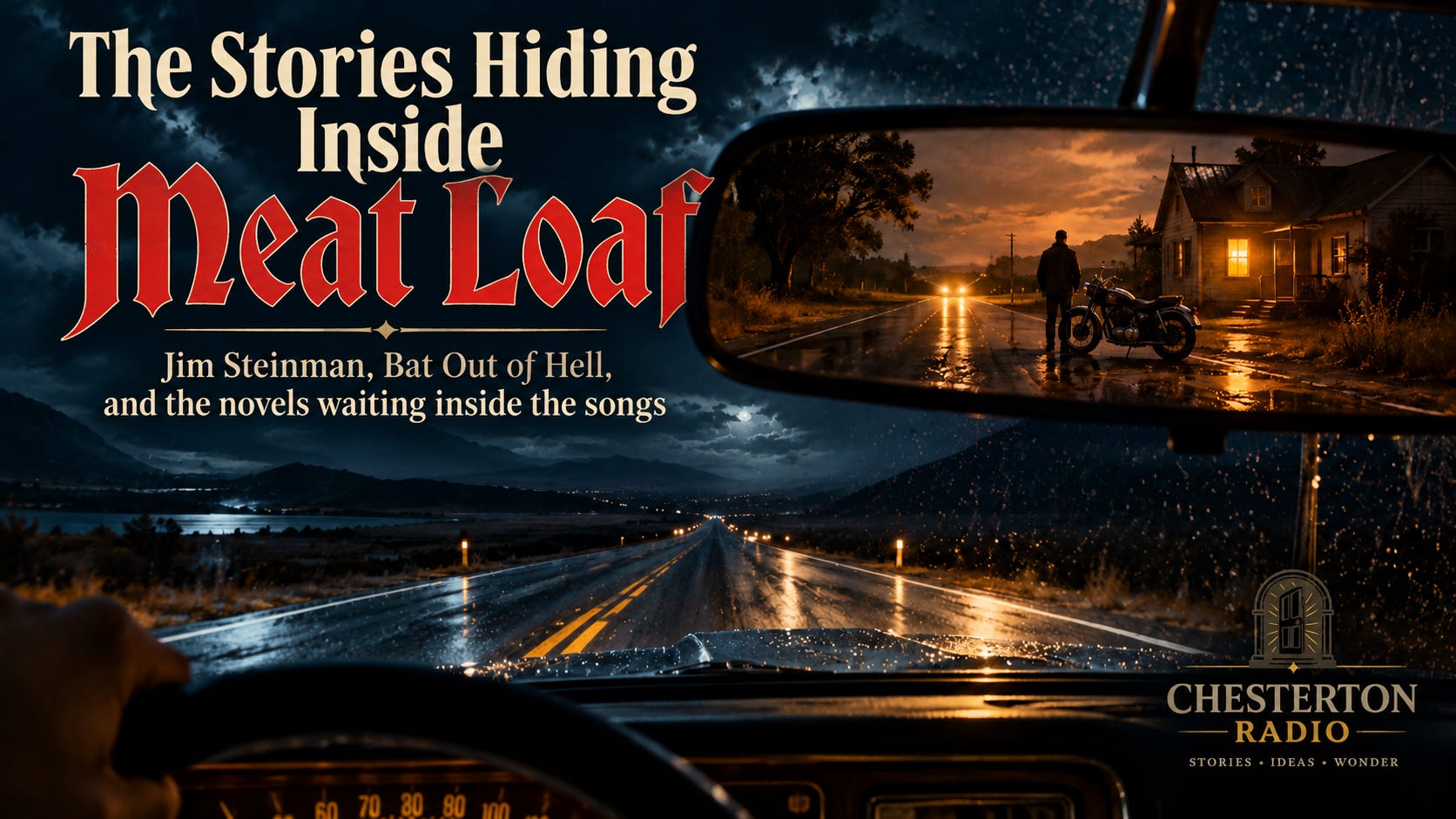
Jim Steinman rarely wrote songs that felt like just songs. Performed with the enormous voice and theatrical presence of Meat Loaf, they became little worlds of their own—filled with motorcycles and highways, bedrooms and photographs, desperate promises, lost youth, memory, love, escape and death.
And they often leave you with the feeling that there is more story than the song has time to tell.
Recently, Chesterton Radio tried an experiment: What happens if we follow those stories beyond the songs?
“Objects in the Rear View Mirror May Appear Closer Than They Are” became two entirely different works of fiction. “Two Out of Three Ain’t Bad” became a story about the painful distance between loving someone and being able to love them in the way they need. And “Bat Out of Hell” took an unexpected turn into the moral and mysterious world of Father Brown.
In this Common Room Deep Dive, Adrian and Clara explore those experiments—and the remarkable storytelling underneath the Meat Loaf/Jim Steinman collaboration. Why do Steinman’s songs so readily suggest characters, places and stories beyond the lyrics? Why do roads, memory, lost youth, regret, homecoming, death and second chances keep appearing?
And then we turn the experiment around. Instead of asking what happens when Steinman becomes literature, we ask what happens when Shakespeare becomes a gothic rock opera.
Perhaps the greatest songs don’t tell us the whole story.
Perhaps they give us a road, a photograph, a motorcycle, someone leaving, someone waiting—and just enough darkness beyond the final note for us to wonder what happens next.
The Affair of the Man in the Photograph

Chesterton Radio presents an original Hercule Poirot mystery: The Affair of the Man in the Photograph.
Meatloaf Steinman Objects in the rearview mirror
FATHER BROWN AND THE LAST ROAD HOME

There are some roads we travel because we want to discover what lies at the end of them.
Meatloaf Steinman Bat out of Hell

Meatloaf Steinman Two out of Three

Nanci Griffith - Gulf Coast Highway


